
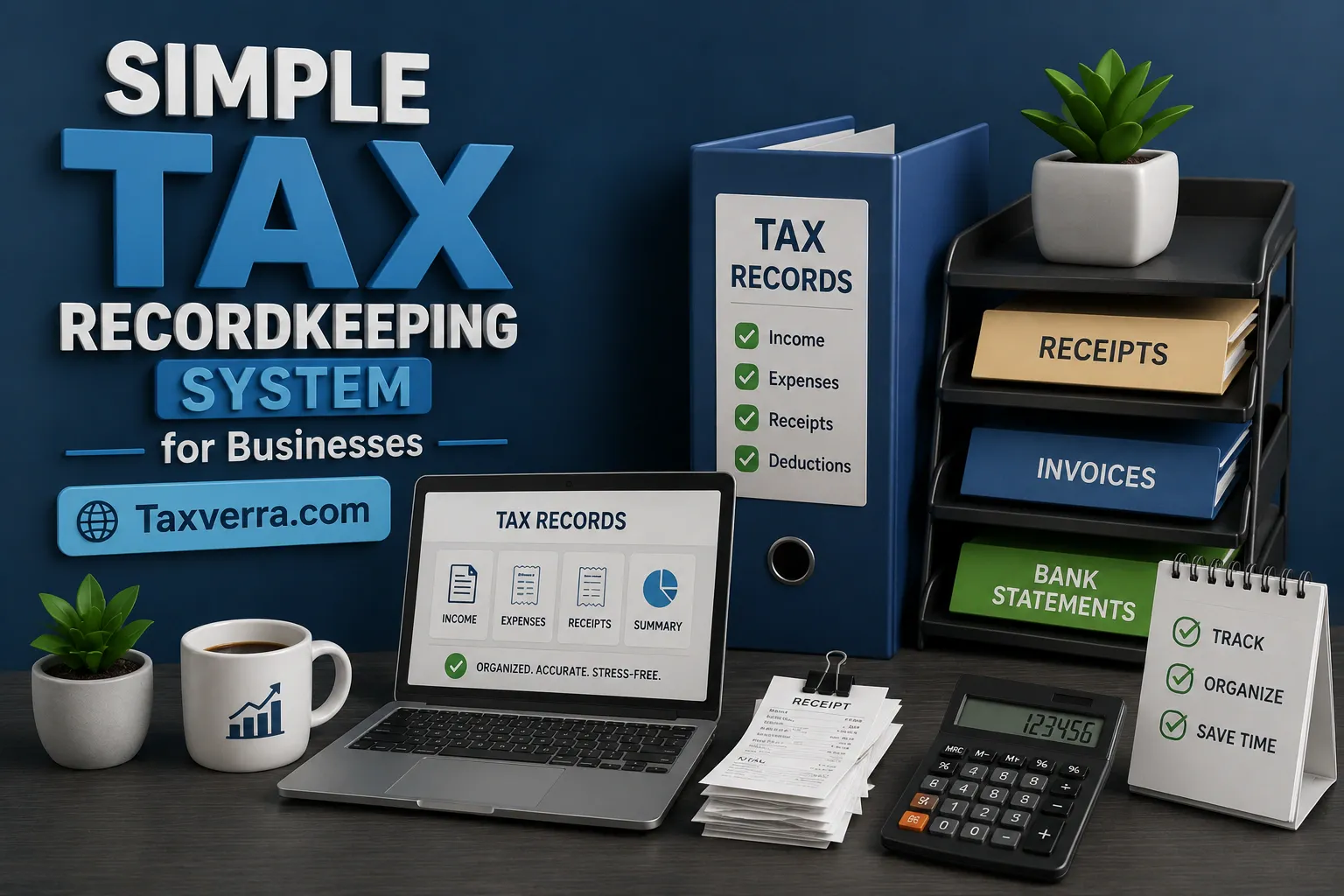
For any business, keeping organized financial records is essential—not just for daily operations, but especially for tax compliance. A simple tax recordkeeping system helps small businesses stay organized, reduce errors, and maximize deductions during tax season.
Many small business owners struggle with disorganized records, missed receipts, or incomplete financial documentation. These challenges can lead to mistakes when filing taxes, higher liabilities, or even penalties.
This guide explains how to set up a simple, efficient tax recordkeeping system for businesses, including the tools, processes, and best practices to keep your financial records accurate and audit-ready.
Why Tax Recordkeeping Matters
Tax recordkeeping isn’t just about compliance—it’s a tool for understanding your business’s financial health. Proper records allow you to:
- Track income and expenses accurately
- Identify tax deductions and credits
- Prepare financial statements quickly
- Meet IRS or local tax authority requirements
- Reduce the risk of audits or penalties
Without proper recordkeeping, even profitable businesses can struggle with cash flow management and tax reporting.
Simple Tax Recordkeeping System for Businesses
For any business, keeping organized financial records is essential—not just for daily operations, but especially for tax compliance. A simple tax recordkeeping system helps small businesses stay organized, reduce errors, and maximize deductions during tax season.
Many small business owners struggle with disorganized records, missed receipts, or incomplete financial documentation. These challenges can lead to mistakes when filing taxes, higher liabilities, or even penalties.
This guide explains how to set up a simple, efficient tax recordkeeping system for businesses, including the tools, processes, and best practices to keep your financial records accurate and audit-ready.
Why Tax Recordkeeping Matters
Tax recordkeeping isn’t just about compliance—it’s a tool for understanding your business’s financial health. Proper records allow you to:
- Track income and expenses accurately
- Identify tax deductions and credits
- Prepare financial statements quickly
- Meet IRS or local tax authority requirements
- Reduce the risk of audits or penalties
Without proper recordkeeping, even profitable businesses can struggle with cash flow management and tax reporting.
Step 1: Separate Business and Personal Finances
The first step in building a tax recordkeeping system is separating business and personal finances.
Mixing personal and business transactions can create confusion, increase errors, and make it harder to claim tax deductions.
Best Practices
- Open a dedicated business bank account
- Use a business credit card for all company purchases
- Record business transactions separately from personal expenses
Separation of accounts simplifies bookkeeping and ensures clean financial records for taxes.
Step 2: Track All Income Sources
Accurate income tracking is essential for calculating taxable revenue. Every source of business income should be recorded, including:
- product or service sales
- online payments (PayPal, Stripe)
- freelance or consulting fees
- affiliate marketing or ad revenue
- interest income from business accounts
Using accounting software helps automatically capture income from multiple sources and reduces errors.
Step 3: Track Expenses Meticulously
Expenses reduce taxable income, so it’s critical to track them accurately.
Common deductible expenses include:
- Office rent and utilities
- Office supplies and equipment
- Marketing and advertising costs
- Travel and business meals
- Software subscriptions and technology
- Professional services (accounting, legal)
Tip: Keep receipts and invoices for all business expenses. Digital storage systems make this process easier.
Step 4: Maintain Organized Documentation
Proper documentation is key to verifying income and expenses. Businesses should keep:
- invoices and receipts
- bank and credit card statements
- payroll records
- contracts with clients or vendors
- tax filings from previous years
Organizing records by category and date makes retrieval easy during audits or tax preparation.
Step 5: Use Accounting Software
Manual bookkeeping is prone to errors and can become overwhelming. Using accounting software simplifies the process.
Popular options for small businesses include:
- QuickBooks – powerful and widely used
- Xero – cloud-based accounting
- Wave Accounting – free platform for small businesses
- FreshBooks – invoicing and bookkeeping
Accounting software helps automate income and expense tracking, generate financial reports, and maintain organized records for tax season.
Step 6: Reconcile Accounts Regularly
Reconciling bank and credit card accounts ensures that all financial transactions are accurate and recorded.
Monthly reconciliation helps:
- Identify missing or duplicate entries
- Detect errors before tax filing
- Maintain accurate cash flow tracking
Businesses that reconcile regularly have fewer issues during tax preparation and audits.
Step 7: Maintain Payroll Records
If a business has employees, payroll is a significant aspect of tax recordkeeping.
Payroll documentation should include:
- Employee wages and salaries
- Payroll tax payments
- Benefits and insurance contributions
- Time and attendance records
Accurate payroll records are critical for filing employment taxes and avoiding penalties.
Step 8: Review Tax Deductions
Identifying eligible deductions helps businesses reduce taxable income.
Common deductions include:
- Home office expenses (if applicable)
- Office supplies and equipment
- Marketing and advertising costs
- Professional services
- Travel and vehicle expenses
Keeping a running list of deductible expenses throughout the year makes tax preparation easier and reduces the risk of missing deductions.
Step 9: Back Up Your Records
Digital backups protect against lost or damaged records. Consider:
- Cloud storage (Google Drive, Dropbox)
- Accounting software with cloud backup
- External hard drives
Regular backups ensure that tax documents are safe and easily accessible.
Step 10: Consult a Tax Professional
Even with a simple tax recordkeeping system, professional guidance is invaluable.
A tax accountant can help:
- Review financial records for accuracy
- Identify overlooked deductions
- Prepare and file tax returns
- Ensure compliance with tax regulations
Working with a professional reduces errors and ensures your business maximizes tax benefits.
Common Recordkeeping Mistakes to Avoid
Small businesses often make the following mistakes:
- Mixing personal and business transactions
- Failing to track all income sources
- Losing receipts or invoices
- Inconsistent bookkeeping
- Ignoring digital backups
- Misclassifying workers or expenses
- Delaying reconciliation
Avoiding these mistakes ensures an efficient, audit-ready tax recordkeeping system.
Best Practices for a Simple Tax Recordkeeping System
To maintain an effective system, businesses should:
- Separate personal and business finances
- Record transactions promptly
- Use accounting software for automation
- Reconcile accounts monthly
- Maintain organized documentation
- Backup records digitally
- Review deductions regularly
- Consult professionals when needed
Following these steps keeps financial records accurate, organized, and tax-ready.

