

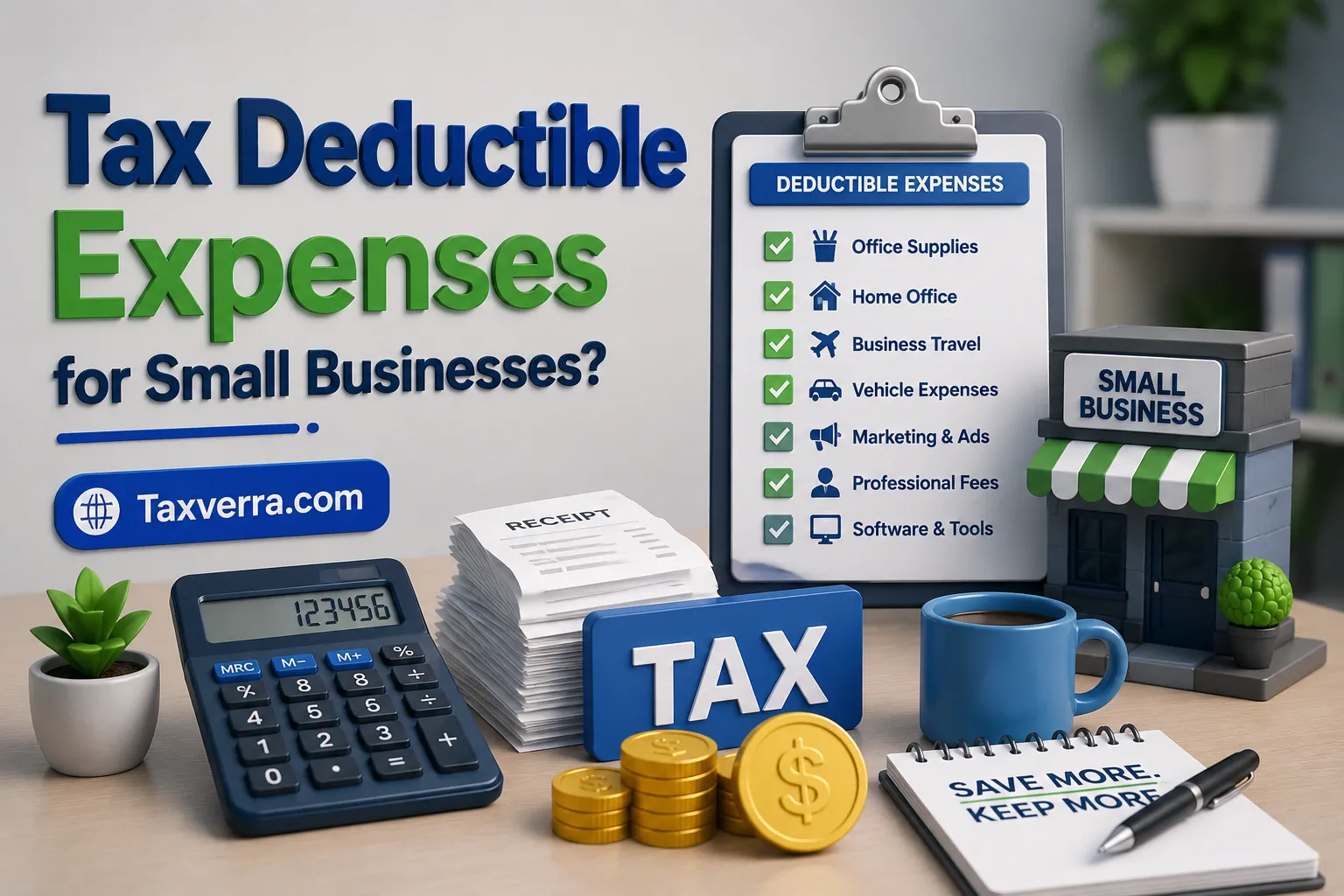
Running a small business involves many operational costs. From office supplies to marketing campaigns, entrepreneurs must spend money to keep their businesses operating efficiently. Fortunately, many of these expenses can be deducted from taxable income, helping businesses reduce their overall tax liability.
Understanding which expenses are tax deductible is essential for small business owners. Properly claiming deductions can significantly lower taxes and improve financial stability. However, many entrepreneurs fail to take advantage of legitimate deductions simply because they do not understand what qualifies as a deductible expense.
This guide explains what expenses are tax deductible for small businesses, how to track them properly, and how these deductions can benefit business owners.
What Are Tax Deductible Expenses?
Tax deductible expenses are business-related costs that can be subtracted from a company’s total revenue to calculate taxable income.
In simple terms, a tax deduction reduces the amount of income on which taxes are calculated.
For example:
- Total Revenue: $80,000
- Business Expenses: $30,000
- Taxable Income: $50,000
By deducting legitimate business expenses, the business only pays taxes on the remaining profit.
To qualify as a deductible expense, the cost must generally be ordinary and necessary for operating the business.
Office and Workspace Expenses
Many small businesses operate from offices, coworking spaces, or even home offices. The expenses associated with maintaining a workspace are often tax deductible.
Common deductible office expenses include:
- office rent
- office supplies
- furniture and desks
- printers and equipment
- internet services
If a business operates from a home office, part of the home expenses may also qualify for deductions, depending on tax regulations.
Proper documentation is important when claiming workspace-related expenses.
Business Equipment and Technology
Modern businesses rely heavily on technology. Equipment purchases used for business purposes are often deductible.
Examples include:
- laptops and computers
- printers and scanners
- smartphones used for business
- accounting software
- project management software
These technology-related costs are essential for productivity and often qualify as deductible expenses.
Marketing and Advertising Costs
Marketing is essential for business growth. Fortunately, most marketing expenses are tax deductible.
Common marketing expenses include:
- social media advertising
- search engine marketing
- website development
- email marketing tools
- promotional materials
For example, money spent on online ads, branding design, and marketing campaigns can usually be deducted as business expenses.
Tracking marketing costs accurately ensures that businesses can claim these deductions correctly.
Business Travel Expenses
Travel expenses related to business activities are typically deductible.
Examples include:
- airfare for business trips
- hotel accommodation
- transportation costs
- business conference fees
- meals during business travel
However, these expenses must be directly related to business activities. Personal travel expenses cannot be deducted.
Proper documentation such as receipts and travel records is essential for claiming these deductions.
Employee Salaries and Benefits
Businesses with employees can deduct payroll-related expenses.
Common payroll deductions include:
- employee salaries and wages
- employee bonuses
- health insurance contributions
- retirement plan contributions
- payroll taxes
Employee-related expenses are typically among the largest deductions available to businesses.
Maintaining proper payroll records is important for tax compliance.
Professional Services
Many businesses rely on professionals such as accountants, consultants, and legal advisors.
The fees paid for professional services are usually tax deductible.
Examples include:
- accounting services
- legal consultation
- business advisory services
- tax preparation services
These services help businesses maintain compliance and improve financial management.
Insurance Expenses
Insurance is another common deductible business expense.
Businesses may deduct insurance costs such as:
- general business insurance
- professional liability insurance
- property insurance
- cyber security insurance
Insurance protects businesses from financial risks, making it an important operational cost.
Business Utilities
Utilities required to operate a business may also be deductible.
Examples include:
- electricity
- water services
- internet connection
- telephone services
If the business operates from a home office, a portion of these expenses may qualify for deductions depending on business usage.
Vehicle and Transportation Expenses
Businesses that use vehicles for work-related activities can deduct transportation costs.
Examples include:
- fuel costs
- vehicle maintenance
- parking fees
- toll charges
- vehicle depreciation
These expenses must be directly related to business activities.
Maintaining a vehicle usage log can help support these deductions during tax filing.
Education and Training
Investing in education and skill development can also be deductible if the training directly improves business operations.
Examples include:
- professional training courses
- industry conferences
- online certifications
- business workshops
These expenses support professional growth and improve business capabilities.
Office Supplies
Every business requires basic supplies for daily operations.
Common office supplies include:
- notebooks
- pens and stationery
- printing paper
- packaging materials
While these costs may seem small individually, they can accumulate into significant expenses over time.
Properly tracking these expenses ensures accurate deduction claims.
Software and Subscriptions
Many modern businesses rely on subscription-based software.
Common deductible subscriptions include:
- accounting software
- CRM tools
- project management platforms
- marketing automation tools
Since these tools support business operations, their subscription costs are typically deductible.
Importance of Record Keeping
Accurate record keeping is essential for claiming deductions successfully.
Businesses should maintain:
- invoices
- receipts
- bank statements
- contracts
- financial reports
Digital accounting systems make it easier to organize and store financial records.
Proper documentation protects businesses in case of tax audits.
Common Mistakes When Claiming Deductions
Many small businesses make mistakes when claiming deductions.
Common mistakes include:
- claiming personal expenses as business expenses
- failing to keep receipts
- inaccurate expense categorization
- missing legitimate deductions
Avoiding these mistakes ensures accurate tax reporting and compliance.
Best Practices for Managing Tax Deductions
To maximize deductions and maintain financial organization, businesses should follow several best practices.
These include:
- tracking expenses regularly
- using accounting software
- maintaining digital receipts
- reviewing financial records monthly
- consulting tax professionals when necessary
These practices help businesses manage their finances efficiently and reduce tax burdens.
Final Thoughts
Understanding tax deductible expenses is essential for small business owners who want to manage their finances effectively and reduce tax liability. By identifying legitimate business expenses and maintaining organized financial records, entrepreneurs can significantly lower their taxable income.
From office supplies and technology costs to marketing expenses and professional services, many operational costs qualify for tax deductions. The key is maintaining accurate documentation and following proper accounting practices.
With the right financial management strategies, small businesses can maximize tax benefits while maintaining full compliance with tax regulations.

