

1. Introduction
Imagine running a business that makes good sales, shows profits on paper, and is growing steadily yet you still struggle to pay bills on time.
This situation is more common than you think.
The reason? Poor working capital management.
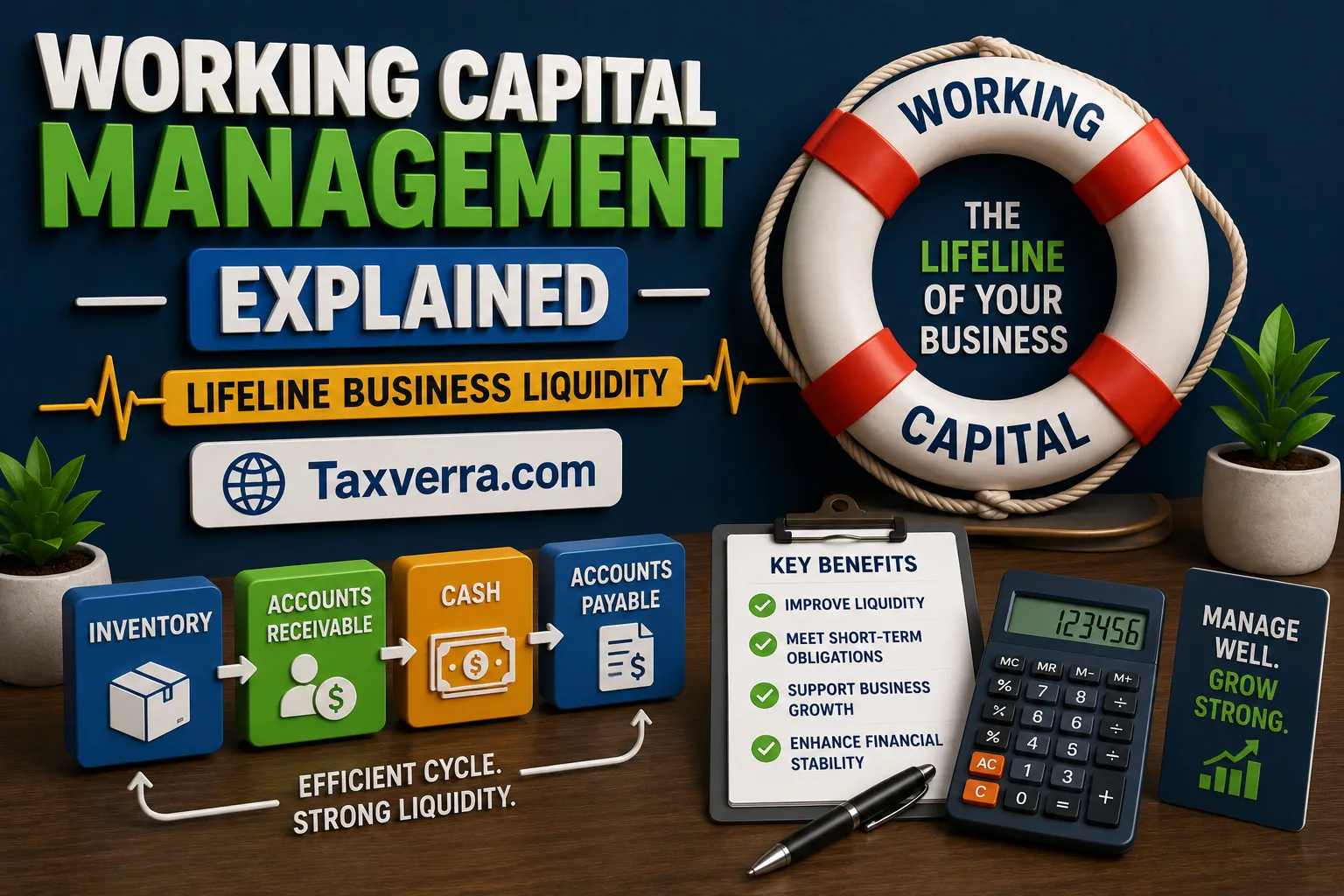
Working capital is not just an accounting number it’s the lifeline of your daily operations. It determines whether your business can survive short-term pressures, take advantage of opportunities, and grow sustainably.
In this guide, you’ll learn:
- What working capital really means
- Why it’s critical for success
- How to manage it like a professional
- Practical strategies you can apply immediately
2. What Is Working Capital?
Definition
Working Capital is the difference between a company’s short-term assets and short-term liabilities.
Working Capital = Current Assets – Current Liabilities
Current Assets:
- Cash and bank balance
- Accounts receivable (money customers owe you)
- Inventory (goods for sale)
- Short-term investments
Current Liabilities:
- Accounts payable (money you owe suppliers)
- Short-term loans
- Accrued expenses
Example
Let’s say:
- Current Assets = $100,000
- Current Liabilities = $70,000
Working Capital = $30,000
This means the business has a financial cushion to operate smoothly.
3. Why Working Capital Management Matters
Working capital management directly affects every part of your business.
3.1 Ensures Business Survival
Even profitable companies can fail if they run out of cash. Proper management ensures:
- Salaries are paid
- Suppliers are satisfied
- Operations continue smoothly
3.2 Improves Liquidity
Liquidity means having enough cash to meet obligations. Strong working capital:
- Reduces financial stress
- Prevents emergency borrowing
3.3 Enhances Profitability
Efficient management reduces:
- Storage costs
- Interest expenses
- Bad debts
3.4 Supports Business Growth
Growth requires:
- More inventory
- More credit to customers
Without proper working capital, growth becomes risky.
4. Key Components of Working Capital
4.1 Cash Management
Cash is the most important asset. The goal is to maintain:
- Enough cash to operate
- But not too much idle cash
Best Practices:
- Prepare cash forecasts
- Monitor daily balances
- Invest surplus cash wisely
4.2 Accounts Receivable (AR)
Accounts receivable represents money owed by customers.
Challenges:
- Late payments
- Bad debts
Strategies:
- Set clear credit policies
- Offer early payment discounts
- Follow up regularly
4.3 Inventory Management
Inventory ties up cash until it is sold.
Risks:
- Overstocking → wasted cash
- Understocking → lost sales
Solutions:
- Use inventory tracking systems
- Forecast demand accurately
- Implement Just-in-Time (JIT)
4.4 Accounts Payable (AP)
Accounts payable is money you owe suppliers.
Smart Approach:
- Use full credit period
- Avoid late payment penalties
- Build strong supplier relationships
5. Working Capital Cycle (Cash Conversion Cycle)
The working capital cycle measures how long cash is tied up in operations.
Formula:
Working Capital Cycle =
Inventory Days + Receivable Days – Payable Days
Example:
- Inventory Days = 50
- Receivable Days = 30
- Payable Days = 20
Cycle = 60 days
This means your cash is locked for 60 days before returning.
Key Insight:
Shorter cycle = better cash flow
6. Types of Working Capital
6.1 Gross Working Capital
Total current assets.
6.2 Net Working Capital
Difference between current assets and liabilities.
6.3 Permanent Working Capital
Minimum capital needed to run daily operations.
6.4 Temporary Working Capital
Additional capital required during peak seasons.
7. Advanced Working Capital Management Strategies
7.1 Improve Cash Flow Visibility
- Use cash flow statements
- Track inflows and outflows daily
- Identify cash shortages early
7.2 Accelerate Receivables
- Send invoices immediately
- Use digital payment options
- Offer incentives for early payment
7.3 Optimize Inventory Levels
- Analyze sales trends
- Eliminate slow-moving items
- Reduce storage costs
7.4 Extend Payables Strategically
- Negotiate longer payment terms
- Take advantage of credit periods
- Avoid damaging supplier trust
7.5 Use Technology and Automation
Modern businesses use:
- Accounting software (QuickBooks, Xero)
- Inventory systems
- Automated billing tools
These tools improve accuracy and save time.
8. Common Mistakes in Working Capital Management
Avoid these costly errors:
Ignoring Cash Flow
Profit does not equal cash.
Poor Inventory Planning
Excess stock blocks cash.
Weak Credit Control
Late collections hurt liquidity.
Overpaying Suppliers Early
Reduces available cash unnecessarily.
Lack of Financial Monitoring
No tracking leads to poor decisions.
9. Important Working Capital Ratios
9.1 Current Ratio
Current Ratio = Current Assets / Current Liabilities
Ideal range: 1.5 to 2
9.2 Quick Ratio (Acid-Test Ratio)
Quick Ratio = (Current Assets – Inventory) / Current Liabilities
Measures immediate liquidity
9.3 Inventory Turnover Ratio
Indicates how quickly inventory is sold.
9.4 Receivables Turnover Ratio
Measures how efficiently customers pay.
10. Real-Life Business Example
Scenario: Small Retail Business
A retail store had:
- High sales
- Low cash availability
Problem:
- Excess inventory
- Customers paying late
Actions Taken:
- Reduced inventory by 25%
- Tightened credit policy
- Improved collection process
Result:
- Increased cash flow
- Reduced working capital cycle
- Improved financial stability
11. Deep Insights (Expert-Level Understanding)
1. Profit Is Not Cash
A business can show profit but still face bankruptcy due to poor cash flow.
2. Industry Differences Matter
Different industries have different needs:
- Retail → Fast cash cycles
- Manufacturing → Long cycles
- Service businesses → Low inventory
3. Growth Consumes Cash
As sales increase:
- More inventory is needed
- More receivables increase
Growth without planning can cause cash shortages.
4. Balance Between Liquidity and Profitability
Too much working capital:
- Idle cash
- Lower returns
Too little:
- Risk of failure
Optimal balance is key.
5. Working Capital as a Competitive Advantage
Efficient businesses:
- Offer better pricing
- Operate smoothly
- Grow faster
12. Practical Takeaways
Apply these strategies immediately:
Track Cash Daily
Always know your financial position.
Reduce Cash Conversion Cycle
Focus on faster inventory turnover and collections.
Control Credit Sales
Avoid giving unnecessary credit.
Negotiate Supplier Terms
Improve cash flexibility.
Use Automation
Save time and reduce errors.
Maintain Emergency Funds
Prepare for unexpected situations.
13. FAQs
Q1: What is ideal working capital?
A positive working capital that ensures smooth operations without excess idle cash.
Q2: Can working capital be negative?
Yes. Some businesses operate efficiently with negative working capital (e.g., supermarkets).
Q3: How can I improve working capital quickly?
- Collect receivables faster
- Reduce inventory
- Extend payables
Q4: Why is working capital important for small businesses?
Because they rely heavily on cash flow to survive daily operations.
Q5: What happens if working capital is too high?
It indicates inefficient use of resources and lower profitability.
14. Final Thought
Working capital management is more than just a financial concept it’s a strategic discipline that determines whether your business thrives or struggles.
Businesses that master it:
- Stay financially strong
- Handle challenges confidently
- Grow sustainably
Remember:
Profit builds wealth, but working capital keeps your business alive.

