

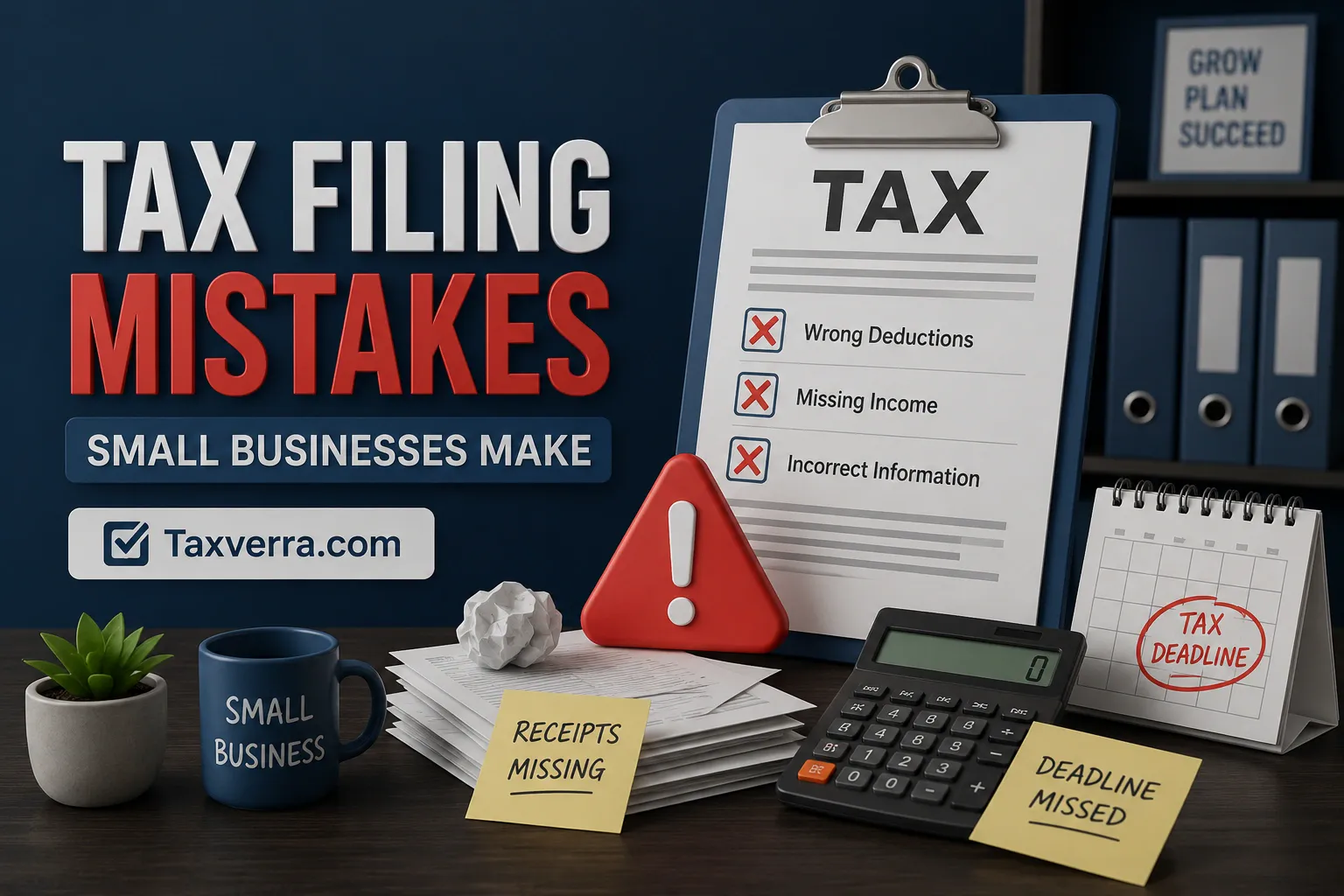
Filing taxes is a critical responsibility for small business owners. However, many entrepreneurs make mistakes during tax preparation that can lead to penalties, audits, or unnecessary financial losses. These mistakes often occur due to poor bookkeeping, lack of tax knowledge, or disorganized financial records.
For small businesses, even minor tax filing errors can create serious complications. Incorrect income reporting, missed deductions, and late filings are some of the most common problems entrepreneurs face during tax season.
Understanding these mistakes and learning how to avoid them can help businesses maintain compliance, reduce tax liabilities, and simplify financial management.
In this guide, we will explore the most common tax filing mistakes small businesses make and provide practical strategies to prevent them.
Why Tax Accuracy Matters for Small Businesses
Accurate tax reporting is essential for maintaining financial stability and avoiding legal issues. Governments require businesses to report their income and expenses accurately when filing tax returns.
When businesses make errors during tax filing, they may face consequences such as:
- financial penalties
- interest on unpaid taxes
- tax audits
- delayed tax refunds
Maintaining organized financial records and following proper accounting practices helps businesses avoid these risks.
Mixing Personal and Business Finances
One of the most common tax mistakes is mixing personal and business expenses.
Many entrepreneurs use personal bank accounts for business transactions, making it difficult to track expenses accurately.
This practice can create confusion during tax preparation and may lead to incorrect financial reporting.
How to Avoid This Mistake
- open a dedicated business bank account
- use a business credit card for company expenses
- record business transactions separately
Separating finances simplifies bookkeeping and improves financial transparency.
Failing to Track Business Expenses
Many small businesses lose valuable tax deductions simply because they do not track expenses properly.
Without detailed expense records, it becomes difficult to claim deductions during tax filing.
Common deductible expenses include:
- office supplies
- marketing costs
- business travel
- software subscriptions
- professional services
Accurate expense tracking ensures that businesses maximize tax deductions and reduce taxable income.
Missing Tax Deadlines
Late tax filing is another common mistake among small businesses.
Many entrepreneurs become busy managing daily operations and forget important tax deadlines.
Missing deadlines can result in:
- late filing penalties
- interest charges
- compliance issues
Best Practices
- maintain a tax calendar
- schedule reminders for tax deadlines
- prepare financial records in advance
Planning ahead helps businesses avoid unnecessary penalties.
Incorrect Income Reporting
Failing to report all income sources can create serious tax problems.
Businesses must report revenue from all sources, including:
- product sales
- service income
- online payments
- affiliate earnings
- consulting fees
Incomplete income reporting may trigger audits or penalties.
Maintaining accurate sales records ensures correct income reporting.
Poor Record Keeping
Poor documentation is a major reason why many businesses struggle during tax season.
Businesses should maintain organized records such as:
- invoices
- receipts
- bank statements
- payroll documents
- tax filings
Without proper records, it becomes difficult to verify financial transactions during tax preparation.
Digital document storage systems can help businesses maintain organized financial documentation.
Not Claiming Eligible Tax Deductions
Many small businesses pay more taxes than necessary because they fail to claim eligible deductions.
Common deductions include:
- office rent
- internet and utilities
- employee salaries
- equipment purchases
- marketing expenses
Reviewing expenses carefully ensures that businesses take full advantage of available tax deductions.
Poor Record Keeping
Poor documentation is a major reason why many businesses struggle during tax season.
Businesses should maintain organized records such as:
- invoices
- receipts
- bank statements
- payroll documents
- tax filings
Without proper records, it becomes difficult to verify financial transactions during tax preparation.
Digital document storage systems can help businesses maintain organized financial documentation.
Not Claiming Eligible Tax Deductions
Many small businesses pay more taxes than necessary because they fail to claim eligible deductions.
Common deductions include:
- office rent
- internet and utilities
- employee salaries
- equipment purchases
- marketing expenses
Reviewing expenses carefully ensures that businesses take full advantage of available tax deductions.
Incorrect Classification of Workers
Misclassifying employees and independent contractors is another common tax mistake.
Businesses must correctly classify workers because different tax rules apply to employees and contractors.
Incorrect classification may result in:
- payroll tax penalties
- legal disputes
- compliance issues
Business owners should review worker classifications carefully to avoid errors.
Failing to Reconcile Financial Records
Bank reconciliation ensures that accounting records match bank statements.
When businesses skip reconciliation, they may overlook:
- missing transactions
- duplicate entries
- incorrect financial records
Regular reconciliation helps maintain accurate financial data for tax preparation.
Ignoring Estimated Tax Payments
Many self-employed individuals and small business owners must pay estimated taxes throughout the year.
Failing to make these payments can result in:
- underpayment penalties
- large tax bills at the end of the year
Making quarterly estimated tax payments helps businesses manage tax obligations effectively.
Not Using Accounting Software
Manual bookkeeping often leads to calculation errors and missing records.
Accounting software helps automate financial management and reduce mistakes.
Popular accounting tools include:
- QuickBooks
- Xero
- Wave Accounting
- FreshBooks
These tools help businesses track income, record expenses, and generate financial reports for tax preparation.

