

Financial management is essential for every business, whether it is a small startup, a growing company, or a large corporation. Two fundamental terms that often appear in business finance are bookkeeping and accounting. While many people assume they are the same, these two processes serve different purposes in managing financial information.
Understanding bookkeeping vs accounting is crucial for entrepreneurs, business owners, and professionals who want to maintain accurate financial records and make informed business decisions.
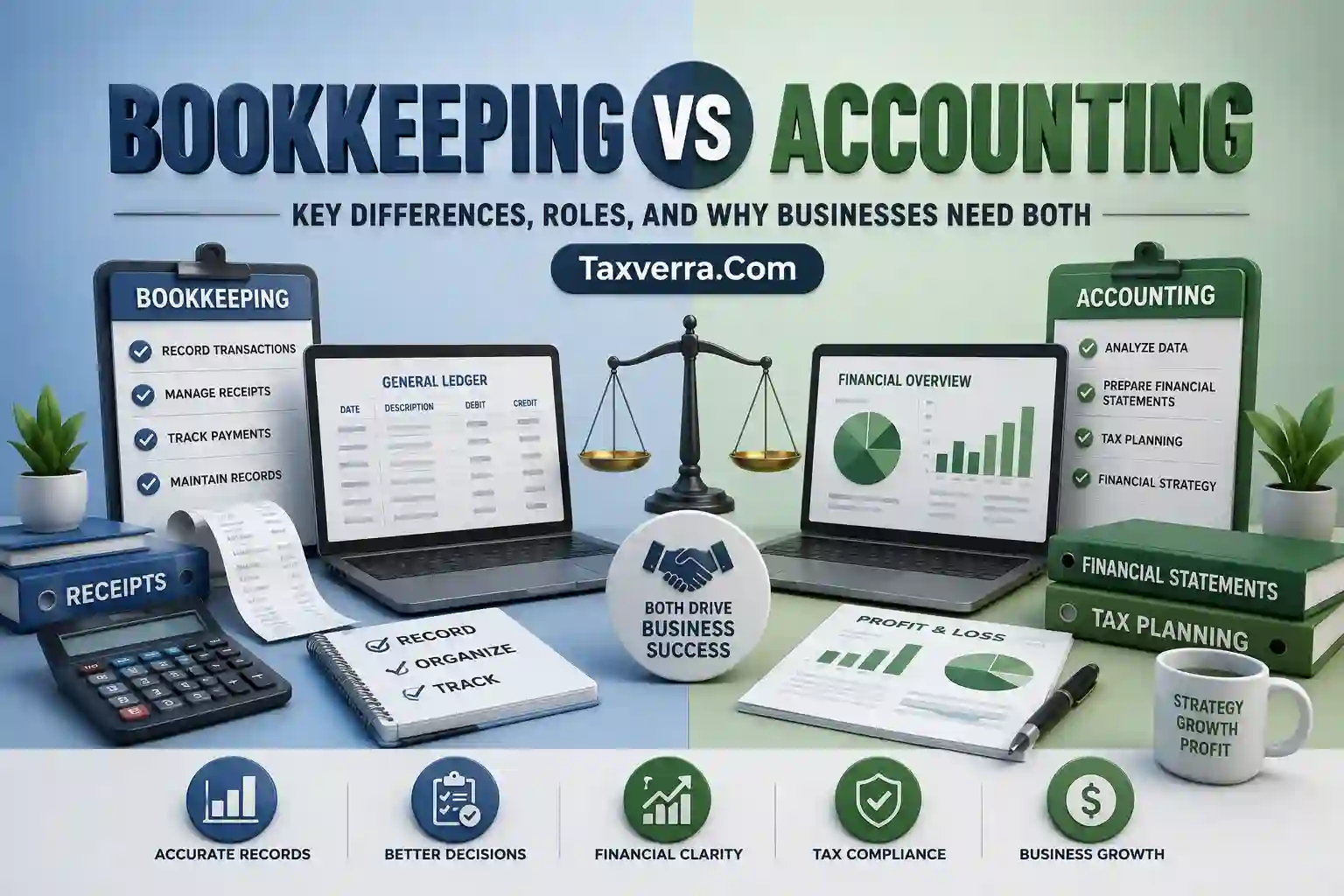
Bookkeeping focuses on recording financial transactions, while accounting involves analyzing, summarizing, and interpreting financial data. Both functions work together to provide a clear picture of a company’s financial health.
In this complete guide, we will explain the difference between bookkeeping and accounting, their roles, responsibilities, tools, benefits, and how businesses use them to manage finances effectively.
What is the Difference Between Bookkeeping and Accounting?
The main difference between bookkeeping and accounting is their purpose within financial management.
- Bookkeeping involves recording daily financial transactions such as sales, expenses, and payments.
- Accounting involves analyzing and interpreting that financial data to create reports and support business decisions.
In simple terms:
Bookkeeping collects financial data, while accounting interprets it.
Without bookkeeping, accountants would not have reliable data to analyze. Without accounting, financial data would not provide meaningful insights for business decisions.
What is Bookkeeping?
Bookkeeping is the systematic process of recording and organizing financial transactions in a business. It ensures that every financial activity is documented accurately.

Businesses generate many financial transactions daily, including:
- Sales revenue
- Business expenses
- Supplier payments
- Customer payments
- Payroll transactions
- Asset purchases
Bookkeeping ensures that all these transactions are recorded in financial records such as journals and ledgers.
Accurate bookkeeping helps businesses maintain organized financial information and track their financial performance.
Key Responsibilities of a Bookkeeper
Bookkeepers handle several essential tasks related to financial record keeping.
Recording Financial Transactions
One of the primary responsibilities of a bookkeeper is recording daily financial transactions in accounting software or ledgers.
Transactions typically include:
- Cash payments
- Credit card transactions
- Bank deposits
- Vendor payments
Each transaction must be recorded correctly to maintain accurate financial records.
Managing the General Ledger
The general ledger is the central repository of all financial transactions within a company.
Bookkeepers categorize each transaction into specific accounts such as:
- Revenue
- Expenses
- Assets
- Liabilities
This categorization helps businesses track financial activity effectively.
Bank Reconciliation
Bookkeepers compare business records with bank statements to ensure that all transactions match.
If discrepancies occur, they investigate and correct the errors.
Bank reconciliation helps prevent:
- Financial mistakes
- Fraud
- Missing transactions
Managing Accounts Payable and Receivable
Bookkeepers track money flowing in and out of the business.
Accounts payable includes:
- Bills from suppliers
- Vendor payments
- Service expenses
Accounts receivable includes:
- Customer invoices
- Payments received
- Outstanding balances
Proper management ensures healthy cash flow.
Maintaining Financial Documents
Bookkeepers maintain records such as:
- Invoices
- Receipts
- Purchase orders
- Payment confirmations
These documents support the financial records and are important for audits and tax filing.
What is Accounting?
Accounting is a broader financial discipline that uses financial data to evaluate a company’s financial performance and provide insights for decision-making.
Accountants analyze the data prepared by bookkeepers and convert it into meaningful financial information.

Accounting helps businesses understand:
- Profitability
- Financial stability
- Operational efficiency
- Growth opportunities
It also ensures that businesses comply with tax laws and financial regulations.
Key Responsibilities of an Accountant
Accountants perform more advanced tasks compared to bookkeepers.
Preparing Financial Statements
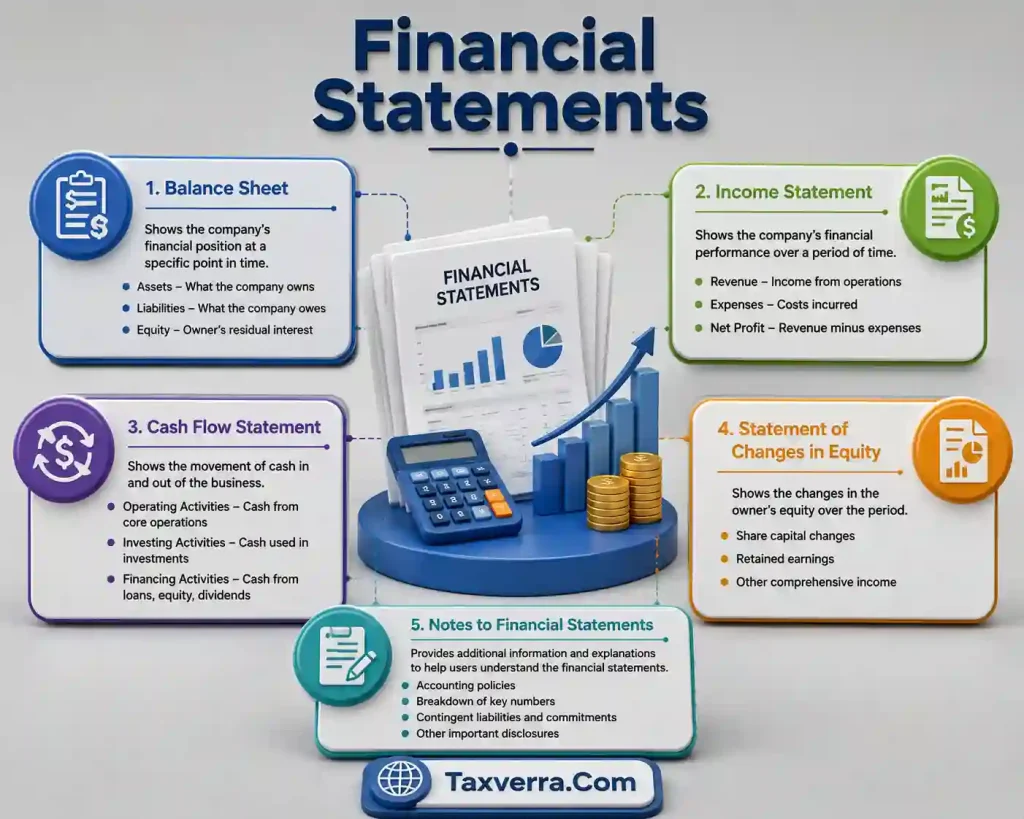
Accountants prepare the main financial reports used to evaluate business performance.
These include:
Income Statement
Shows the company’s revenue, expenses, and profit over a specific period.
Balance Sheet
Displays the company’s financial position by listing assets, liabilities, and equity.
Cash Flow Statement
Tracks how cash moves in and out of the business.
These reports help stakeholders understand the financial health of a business.
Financial Analysis
Accountants analyze financial data to identify trends and opportunities.
They evaluate metrics such as:
- Profit margins
- Cost efficiency
- Revenue growth
- Debt levels
This analysis helps businesses make better strategic decisions.
Tax Preparation and Compliance
Accountants ensure businesses comply with tax regulations by:
- Preparing tax returns
- Calculating tax obligations
- Identifying deductions
- Ensuring regulatory compliance
Tax planning also helps businesses reduce unnecessary tax expenses.
Budgeting and Financial Forecasting
Accountants assist companies in planning future finances by creating budgets and financial forecasts.
These forecasts help businesses anticipate:
- Future revenue
- Operational expenses
- Investment needs
This planning supports long-term business growth.
Financial Advisory
Accountants often provide professional advice on financial matters such as:
- Investment opportunities
- Cost control strategies
- Business expansion
- Risk management
Their insights help business owners make informed decisions.
Bookkeeping vs Accounting: Major Differences
Although bookkeeping and accounting are closely related, they differ in several ways.
Scope of Work
Bookkeeping focuses on recording financial transactions, while accounting focuses on analyzing financial information.
Skill Requirements
Bookkeeping requires knowledge of financial record-keeping and accounting software.
Accounting requires deeper knowledge of financial principles, financial analysis, and tax regulations.
Decision-Making Role
Bookkeepers mainly maintain records.
Accountants use financial data to support strategic decision-making.
Financial Reporting
Bookkeepers rarely prepare official financial statements.
Accountants prepare financial reports for management, investors, and regulatory authorities.
Educational Requirements
Bookkeepers may complete certification programs.
Accountants usually hold degrees in accounting, finance, or related fields.
Bookkeeping vs Accounting Comparison Table
| Feature | Bookkeeping | Accounting |
|---|---|---|
| Primary Focus | Recording transactions | Analyzing financial data |
| Role | Administrative | Strategic |
| Financial Statements | Not usually prepared | Prepared regularly |
| Decision Making | Limited involvement | Major involvement |
| Skill Level | Basic financial knowledge | Advanced financial expertise |
| Purpose | Maintain records | Provide insights |
How Bookkeeping and Accounting Work Together
Bookkeeping and accounting function as two stages of financial management.
Stage 1: Bookkeeping
Financial transactions are recorded and organized.
Stage 2: Accounting
Financial data is analyzed to generate reports and insights.
This partnership ensures that businesses maintain accurate records and effective financial strategies.
Importance of Bookkeeping for Small Businesses
Bookkeeping is essential for maintaining organized financial records.
Accurate Financial Tracking
Businesses can monitor income, expenses, and profits.
Cash Flow Management
Bookkeeping helps companies track incoming and outgoing cash.
Easier Tax Preparation
Well-organized records simplify tax filing.
Financial Transparency
Business owners gain a clearer view of their financial situation.
Compliance with Regulations
Maintaining financial records helps businesses meet legal requirements.
Importance of Accounting for Businesses
Accounting provides insights that help businesses grow and succeed.
Better Financial Decision-Making
Financial reports help business owners evaluate performance and plan improvements.
Strategic Financial Planning
Accounting helps companies create budgets and growth strategies.
Performance Evaluation
Businesses can measure profitability and efficiency.
Investor Confidence
Professional financial statements increase credibility with investors and lenders.
Risk Management
Accountants help identify potential financial risks and develop solutions.
Tools Used in Bookkeeping and Accounting
Technology has significantly improved financial management.
Popular Bookkeeping Software
Common bookkeeping tools include:
- QuickBooks
- Xero
- FreshBooks
- Wave Accounting
These tools automate tasks such as:
- Expense tracking
- Invoice creation
- Transaction recording
Accounting Software
Accounting professionals use advanced tools for:
- Financial analysis
- Budget forecasting
- Tax preparation
- Reporting
Many accounting systems integrate directly with bookkeeping software.
When Should a Business Hire a Bookkeeper?
Businesses should consider hiring a bookkeeper when:
- Financial transactions increase
- Record keeping becomes time-consuming
- Business owners want to focus on operations
A bookkeeper ensures financial records remain accurate and organized.
When Should a Business Hire an Accountant?
Businesses usually hire accountants when they require:
- Financial statements
- Tax planning and filing
- Financial analysis
- Business financial strategy
Accountants are especially valuable during tax season, audits, and business expansion.
Can One Person Do Both Bookkeeping and Accounting?
In small businesses, one professional may perform both bookkeeping and accounting tasks.
However, as a business grows, financial operations become more complex, and companies often separate these roles.
Large organizations typically have dedicated accounting departments responsible for financial management.
Career Opportunities in Bookkeeping and Accounting
Both fields offer strong career opportunities.
Bookkeeping Careers
Examples include:
- Bookkeeper
- Accounting Clerk
- Payroll Administrator
- Accounts Assistant
These roles focus mainly on financial record management.
Accounting Careers
Accounting careers include:
- Financial Accountant
- Auditor
- Tax Consultant
- Financial Analyst
- Chief Financial Officer (CFO)
Professional certifications significantly improve career prospects.
Future of Bookkeeping and Accounting
Technology is transforming the financial industry.
Automation and artificial intelligence are simplifying bookkeeping tasks such as transaction recording and expense categorization.
However, accountants remain essential because businesses still require financial interpretation, compliance expertise, and strategic planning.
The future of accounting will increasingly focus on financial analysis and business advisory services.
Frequently Asked Questions
What does a bookkeeper do?
A bookkeeper records financial transactions, maintains financial records, manages invoices, and tracks expenses.
What does an accountant do?
An accountant analyzes financial data, prepares financial statements, manages taxes, and provides financial advice.
Which is better bookkeeping or accounting?
Both are important. Bookkeeping maintains financial records, while accounting analyzes those records to guide business decisions.
Do small businesses need bookkeeping?
Yes. Bookkeeping helps small businesses track income, expenses, and financial transactions accurately.
Conclusion
Understanding bookkeeping vs accounting is essential for effective financial management. Bookkeeping focuses on recording and organizing financial transactions, while accounting analyzes and interprets that data to provide meaningful insights.
Together, these processes help businesses maintain accurate records, comply with regulations, manage cash flow, and plan for future growth.
For entrepreneurs and business owners, investing in proper bookkeeping and accounting practices can lead to better financial decisions, improved business performance, and long-term success.

