

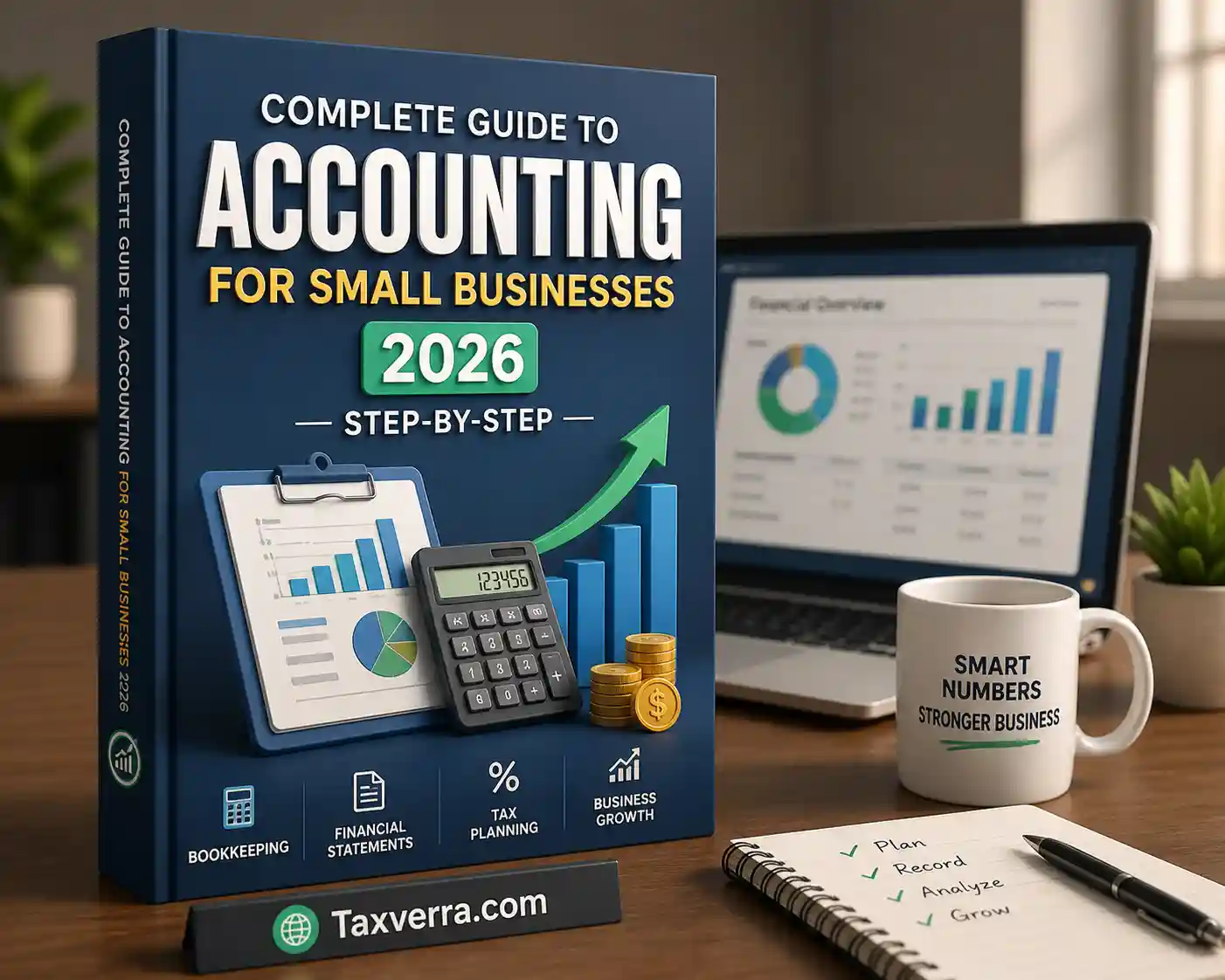
Why Accounting Matters More Than Ever in 2026
When most people start a business, they focus on sales, marketing, and growth. What they often overlook is small business accounting, which quietly determines whether the business survives or fails. Accounting is not just about recording numbers; it is about understanding financial health, controlling costs, and making informed decisions.
In my experience, I have seen businesses with strong sales collapse simply because they ignored cash flow management. One client was generating consistent revenue but had no system to track receivables. As a result, payments were delayed, expenses piled up, and the business faced a liquidity crisis despite being profitable on paper.
A practical example is a small retail store that tracks daily sales but ignores expenses like rent, utilities, and inventory shrinkage. Without proper accounting, the owner believes the business is profitable when in reality, margins are shrinking.
One mistake I often see is mixing personal and business finances. This creates confusion, incorrect reporting, and serious tax issues. Proper accounting ensures financial clarity, compliance, and long-term sustainability.
Here is how accounting impacts real businesses:
| Area | Impact |
|---|---|
| Cash Flow | Ensures liquidity to run operations |
| Profitability | Identifies actual earnings |
| Tax Compliance | Avoids penalties and audits |
| Decision Making | Supports strategic growth |
How This Guide Will Transform Your Financial Understanding
This guide is not just theoretical. It is designed as a step-by-step accounting system for small businesses that you can actually implement.
We will start with the basics such as bookkeeping and recording transactions, then move into intermediate areas like financial statements and adjustments, and finally into advanced topics like financial analysis and decision-making.
Step by step, you will learn:
- How to set up an accounting system
- How to record transactions correctly
- How to prepare financial statements
- How to analyze business performance
A real-world scenario involved a service-based client who had no structured accounting system. We implemented a simple workflow:
- Record daily transactions
- Categorize expenses
- Reconcile bank statements
- Generate monthly reports
Within three months, the client was able to identify unnecessary expenses and improve profit margins by 15 percent.
Key Steps in Small Business Accounting
1. Open a Business Bank Account
Separating personal and business finances is essential.
Benefits include:
- Easier bookkeeping
- Clear financial records
- Legal protection
- Simplified tax filing
Experts recommend keeping separate bank accounts and credit cards for business activities.
2. Choose an Accounting Method
There are two major accounting methods used by small businesses.
Cash Accounting
Transactions are recorded when cash is received or paid.
Example:
- Sale recorded when payment is received.
Advantages:
- Simple
- Easy to maintain
- Ideal for small businesses
Disadvantages:
- Does not show future obligations.
Accrual Accounting
Transactions are recorded when they occur, regardless of payment timing.
Example:
- Sale recorded when invoice is issued.
Advantages:
- More accurate financial reports
- Required for larger businesses
Disadvantages:
- More complex system
Accounting Method Comparison (Graph)
| Feature | Cash Accounting | Accrual Accounting |
|---|---|---|
| Recording | When cash changes | When transaction occurs |
| Complexity | Simple | Complex |
| Accuracy | Moderate | High |
| Best For | Small businesses | Growing companies |
How Accountants Use This in Real Life
In real business environments, accountants do not just prepare reports. They interpret financial data and guide decisions.
For example:
- Before expanding a business, accountants analyze cash flow trends
- Before hiring staff, they evaluate cost versus expected revenue
- During tax season, they ensure accurate reporting and compliance
A common workflow used in practice:
- Collect financial data
- Record in accounting system
- Adjust entries if needed
- Prepare reports
- Analyze performance
- Advise business owner
This structured approach turns raw data into actionable insights.
Step by Step Accounting Workflow for Beginners
To simplify things, here is a basic accounting workflow you can follow:
- Identify transactions
- Record them in a journal
- Post to ledger accounts
- Prepare trial balance
- Create financial statements
Basic formula used in accounting:
Profit = Revenue minus Expenses
Each component matters:
Profit shows business performance
Revenue is income generated
Expenses are costs incurred
Understanding the Core Difference That Shapes Your Accounting System
When a small business starts, bookkeeping often begins in the simplest form possible. Many owners track only cash inflows and outflows, believing that this is enough to manage their finances. This approach is known as single-entry bookkeeping. It records transactions once, usually in a cash book, focusing mainly on income and expenses.
On the other hand, double-entry bookkeeping is a structured system where every transaction affects at least two accounts. This system is based on the fundamental accounting principle:
This equation ensures that the books always remain balanced, giving a complete picture of the business.
In my experience, many small businesses initially use single-entry because it feels easier. However, as transactions grow, they quickly realize its limitations. A practical example is a freelancer who tracks only income and expenses but has no clear idea of accounts receivable or liabilities. This leads to confusion when payments are delayed or obligations are missed.
How Single-Entry Bookkeeping Works in Real Business
Single-entry bookkeeping is straightforward. Each transaction is recorded once, typically as either income or expense.
A simple structure looks like this:
| Date | Description | Income | Expense | Balance |
|---|---|---|---|---|
| 1 Jan | Service Revenue | 5000 | – | 5000 |
| 2 Jan | Office Rent | – | 2000 | 3000 |
This method works well for:
- Freelancers
- Small cash-based businesses
- Startups with very few transactions
In one client case, a small shop owner maintained a notebook of daily sales and expenses. While this helped track cash, it failed to show inventory levels and outstanding payments. When the business expanded, the owner struggled to understand profitability accurately.
One mistake I often see is relying on single-entry for too long. It may save time initially, but it limits financial visibility and decision-making.
How Double-Entry Bookkeeping Transforms Financial Control
Double-entry bookkeeping records every transaction in two accounts using debit and credit rules. This system provides a complete financial picture.
Example:
If a business purchases equipment for cash:
- Equipment account increases
- Cash account decreases
Both sides are recorded, keeping the equation balanced.
A practical workflow:
- Identify accounts involved
- Apply debit and credit rules
- Record in journal
- Post to ledger
- Prepare reports
In real life, I worked with a service company that switched from single-entry to double-entry. Within months, they gained visibility into:
- Customer balances
- Supplier obligations
- Accurate profit margins
This allowed them to make better pricing and expansion decisions.
Key Differences Between Single and Double Entry Systems
| Feature | Single Entry | Double Entry |
|---|---|---|
| Recording | One-sided | Two-sided |
| Complexity | Simple | Structured |
| Accuracy | Limited | High |
| Financial Statements | Not complete | Fully prepared |
| Error Detection | Difficult | Easier |
| Suitability | Small/simple businesses | Growing/established businesses |
The biggest advantage of double-entry is error detection and financial accuracy. If the books do not balance, it immediately signals a problem.
Why a Strong Chart of Accounts Builds Financial Clarity from Day One
When setting up small business accounting, one of the most critical yet overlooked steps is designing a proper Chart of Accounts. Many business owners think accounting starts with recording transactions, but in reality, it starts with how you organize those transactions.
A Chart of Accounts (COA) is essentially the backbone of your accounting system. It is a structured list of all accounts used to record financial transactions, including assets, liabilities, equity, income, and expenses.
In my experience, businesses that invest time in structuring their COA early avoid major reporting issues later. A practical example is a service-based client who recorded all expenses under one category called “miscellaneous.” At year-end, we had no clear breakdown of costs, making it difficult to identify where money was actually being spent.
One mistake I often see is copying a generic COA template without customizing it. Every business is different. A retail store needs inventory accounts, while a freelancer may not.
A well-designed Chart of Accounts helps in:
- Tracking business performance accurately
- Preparing financial statements easily
- Making informed decisions
- Ensuring tax compliance
Understanding the Structure of a Chart of Accounts
A Chart of Accounts is typically divided into five main categories. Each category represents a different aspect of the business.
| Category | Description | Example |
|---|---|---|
| Assets | What the business owns | Cash, Inventory |
| Liabilities | What the business owes | Loans, Payables |
| Equity | Owner’s investment | Capital |
| Income | Revenue earned | Sales, Service Income |
| Expenses | Costs incurred | Rent, Salaries |
In real-world practice, accounts are often assigned codes for better organization. For example:
- 1000 series for Assets
- 2000 series for Liabilities
- 3000 series for Equity
- 4000 series for Income
- 5000 series for Expenses
This numbering system makes it easier to manage and scale the accounting system.
A practical example is a small manufacturing business I worked with. Initially, they had no structured coding system. After implementing a categorized COA, reporting became faster and more accurate, especially during audits.
How to Create a Chart of Accounts Step by Step
Setting up a Chart of Accounts is not complicated if you follow a structured approach.
Step 1 Identify your business type
Understand whether you are a service, trading, or manufacturing business
Step 2 List major account categories
Assets, liabilities, equity, income, and expenses
Step 3 Break down into sub-accounts
For example, under expenses you can have rent, utilities, salaries
Step 4 Assign account codes
Use a logical numbering system
Step 5 Keep it simple but scalable
Avoid too many accounts initially but allow room for growth
In my experience, starting simple works best. Overcomplicating the COA at the beginning creates confusion rather than clarity.
The Financial Story Every Business Must Understand
Every business generates numbers, but not every business understands what those numbers are saying. This is where essential financial statements come in. They are not just reports prepared for compliance; they are tools that reveal the true financial position, performance, and cash movement of a business.
At the core, there are three key statements every small business must understand: the Income Statement, the Balance Sheet, and the Cash Flow Statement. Together, they form a complete financial picture.
In my experience, many business owners focus only on profit shown in the income statement and ignore cash flow. One client had strong reported profits but struggled to pay suppliers on time. The issue was not profitability but poor cash flow management, which was only visible in the cash flow statement.
A practical example is a small service business that shows high revenue but also has large unpaid invoices. Without reviewing the balance sheet, the owner assumes everything is fine, while in reality, cash is not being collected.
These statements help answer critical questions:
- Is the business profitable
- What does the business own and owe
- Is there enough cash to sustain operations
Understanding these answers is what separates a reactive business owner from a strategic one.
Income Statement Turning Revenue into Profit Insights
The Income Statement shows how much profit a business earns over a period. It tracks revenue and expenses, ultimately calculating net profit.
Each component plays a key role:
- Revenue represents total income generated
- Expenses include all costs such as rent, salaries, and utilities
- Profit shows the remaining earnings
In practice, I often advise clients to break down expenses into categories. A business that tracks only total expenses misses insights. For example, a retail client discovered that logistics costs were increasing faster than sales, which helped them renegotiate supplier contracts.
Step by step process to prepare an income statement:
- Record all revenue
- List all expenses
- Subtract expenses from revenue
- Analyze profit trends
One mistake I often see is ignoring small expenses. Over time, these accumulate and significantly impact profitability.
Balance Sheet Understanding Financial Position at a Glance
The Balance Sheet provides a snapshot of what the business owns and owes at a specific point in time. It is based on the fundamental accounting equation:
Breakdown:
- Assets include cash, inventory, equipment
- Liabilities include loans and payables
- Equity represents owner’s investment
A real-world example involved a small manufacturing business that appeared profitable but had increasing liabilities. The balance sheet revealed heavy dependence on short-term loans, creating financial risk.
In my experience, business owners rarely review their balance sheet regularly, which is a mistake. It helps in understanding:
- Financial stability
- Debt levels
- Asset utilization
Step by step:
- List all assets
- List liabilities
- Calculate equity
- Ensure both sides balance
Cash Flow Statement Managing the Lifeline of Business
Profit does not guarantee survival. Cash does. The Cash Flow Statement tracks actual cash movement in and out of the business.
It is divided into three sections:
- Operating activities
- Investing activities
- Financing activities
A practical example is a construction business that receives payments after project completion. Even though profits are high, delayed cash inflows create operational challenges.
In my experience, the most successful small businesses track cash flow weekly, not monthly.
Step by step approach:
- Track all cash inflows
- Track all cash outflows
- Categorize into activities
- Monitor net cash position
One mistake I often see is relying only on bank balance without analyzing cash flow patterns.
How Accountants Use Financial Statements in Real Life
In professional practice, financial statements are used to guide decisions, not just record history.
Typical workflow:
- Prepare income statement
- Review balance sheet
- Analyze cash flow
- Identify trends and risks
- Advise business owner
For example:
- Before expansion, accountants check cash flow stability
- Before taking loans, they review debt levels
- For pricing decisions, they analyze cost structures
This is how raw data becomes strategic insight.ck cash inflows and outflows.
Why Expense Tracking Is the Hidden Driver of Profitability
When business owners think about growth, they usually focus on increasing sales. What often gets ignored is tracking business expenses, which directly impacts profitability. In reality, controlling expenses is often faster and more effective than increasing revenue.
At a basic level, expense tracking means recording every cost incurred in running the business. At an advanced level, it becomes a system for cost control, financial analysis, and decision-making.
In my experience, one of the most common issues is underestimating small expenses. A client running a digital service business believed their monthly costs were minimal. Once we implemented structured tracking, we discovered recurring software subscriptions and marketing tools consuming nearly 25 percent of revenue.
A practical example is a small retail store that tracks inventory purchases but ignores operational costs like electricity and delivery charges. Without complete expense tracking, the owner sees sales growth but does not understand why profits remain low.
One mistake I often see is relying on memory instead of records. This leads to missing transactions, incorrect reporting, and tax complications.
Effective expense tracking helps in:
- Identifying unnecessary costs
- Improving profit margins
- Preparing accurate financial statements
- Ensuring tax compliance
Building a Simple but Effective Expense Tracking System
A strong expense tracking system does not have to be complex, but it must be consistent. The key is to create a structured workflow that captures every transaction.
Step by step process:
- Record every expense immediately
- Categorize each transaction
- Store supporting documents
- Review expenses weekly
- Analyze monthly trends
Basic formula to understand impact:
Each expense directly reduces profit, which is why accurate tracking is essential.
In practice, I recommend using categories such as:
- Rent
- Salaries
- Utilities
- Marketing
- Transportation
- Office supplies
A real-world case involved a small logistics company that categorized all costs under “transport.” After restructuring, they separated fuel, maintenance, and driver wages. This revealed that fuel inefficiency was the main cost driver, leading to better route planning and cost reduction.
Real-World Application in Business Decision Making
Expense tracking is not just about recording costs. It directly influences business decisions.
For example:
- Pricing decisions depend on accurate cost data
- Budgeting requires historical expense patterns
- Cost control relies on identifying high-expense areas
A practical example is a food business that tracked ingredient costs but ignored packaging expenses. Once included, they realized packaging was significantly affecting margins, leading to a supplier change.
In my experience, businesses that review expenses monthly can quickly identify trends such as rising costs or unnecessary spending.
Expense Categories and Their Impact on Financial Control
A well-structured expense system improves clarity and control. Below is a typical breakdown:
| Category | Purpose | Example |
|---|---|---|
| Fixed Expenses | Regular costs | Rent, Salaries |
| Variable Expenses | Fluctuating costs | Utilities, Raw materials |
| Direct Costs | Linked to production | Inventory |
| Indirect Costs | Support operations | Admin expenses |
Understanding these categories helps in analyzing which costs are controllable and which are unavoidable.
How Accountants Use Expense Tracking in Real Life
In professional practice, accountants rely on expense tracking for multiple purposes:
- Recording transactions accurately
- Preparing financial statements
- Monitoring cost behavior
- Advising on cost reduction
- Ensuring tax compliance
A typical workflow:
- Collect expense data
- Verify receipts
- Categorize correctly
- Record in system
- Review and analyze
Without proper tracking, financial reports lose reliability and decision-making becomes weak.
Managing Accounts Receivable and Payable for Small Businesses
Why Cash Flow Control Depends on Receivables and Payables
When business owners talk about growth, they often focus on revenue and profit. What actually determines survival is cash flow, and that is directly controlled by how well you manage accounts receivable and accounts payable.
Accounts receivable represents money customers owe you, while accounts payable represents what you owe to suppliers. Together, they create the timing difference between earning money and actually receiving or paying it.
In my experience, one of the most common issues is profitable businesses struggling with cash shortages. A client in the service industry had strong monthly revenue, but customers were paying after 60 days while suppliers required payment within 30 days. This mismatch created constant pressure on cash flow.
A practical example is a wholesale business that sells goods on credit but does not follow up on collections. Sales increase, but cash does not come in, leading to operational challenges.
One mistake I often see is ignoring receivables aging and payment cycles. Without monitoring these, businesses lose control over liquidity.
Managing receivables and payables effectively helps in:
- Maintaining healthy cash flow
- Reducing bad debts
- Building strong supplier relationships
- Improving financial stability
Understanding Accounts Receivable in Real Business
Accounts receivable management is about ensuring that money owed by customers is collected on time.
Step by step process:
- Issue invoice immediately after sale
- Set clear payment terms
- Track outstanding invoices
- Follow up regularly
- Record collections
A useful formula to measure efficiency:
Receivable Days = Accounts Receivable divided by Credit Sales multiplied by 365
This shows how quickly a business collects cash.
In practice, I worked with a consulting firm that had no structured follow-up system. After implementing weekly receivable tracking, their average collection period reduced from 75 days to 40 days, significantly improving cash flow.
One mistake I often see is offering credit without proper evaluation of customers. This increases the risk of non-payment.
Managing Accounts Payable Without Damaging Relationships
Accounts payable management focuses on paying suppliers efficiently while maintaining liquidity.
Step by step approach:
- Record all supplier invoices
- Verify accuracy
- Schedule payments based on due dates
- Prioritize critical suppliers
- Maintain payment records
A practical example is a retail business that paid all suppliers immediately without planning. This reduced available cash for operations. After restructuring payments according to due dates, they improved working capital.
In my experience, good payable management is about balance. Paying too early affects cash flow, while paying too late damages supplier trust.
Real-World Workflow Used by Accountants
In professional practice, managing receivables and payables follows a structured workflow:
Receivables:
- Record sales on credit
- Monitor aging report
- Follow up on overdue invoices
- Record collections
Payables:
- Record supplier invoices
- Track due dates
- Schedule payments
- Reconcile balances
This system ensures both inflows and outflows are controlled effectively.
Aging Analysis A Critical Tool for Control
One of the most powerful tools is the aging report, which categorizes receivables and payables based on time.
| Category | Meaning |
|---|---|
| Current | Not yet due |
| 30 Days | Slightly overdue |
| 60 Days | Risk increasing |
| 90+ Days | High risk |
In my experience, businesses that review aging reports weekly significantly reduce bad debts.
Tax Responsibilities for Small Businesses
Why Tax Compliance Is a Business Survival Skill in 2026
For many small business owners, tax responsibilities feel like a once-a-year task. In reality, taxes are a continuous process that affects cash flow, profitability, and legal compliance throughout the year. Ignoring this can turn a growing business into a financially stressed one almost overnight.
At a basic level, taxes involve calculating income, applying relevant rates, and filing returns. At an advanced level, it becomes tax planning, compliance strategy, and risk management.
In my experience, one of the most common issues is underestimating tax liabilities. A client running a digital services business focused heavily on revenue growth but did not set aside funds for taxes. At year-end, they faced a large tax bill with no cash reserves, forcing them to delay payments and incur penalties.
A practical example is a retail business that collects sales tax but uses that cash for operations. When it is time to remit taxes, the funds are no longer available, creating serious compliance risks.
One mistake I often see is treating tax as an afterthought rather than integrating it into the accounting system. Proper tax management ensures:
- Compliance with legal requirements
- Avoidance of penalties and audits
- Better cash flow planning
- Accurate financial reporting
Understanding Key Types of Taxes for Small Businesses
Small businesses are typically responsible for multiple types of taxes depending on their structure and operations.
Common categories include:
- Income Tax based on net profit
- Sales Tax or VAT collected from customers
- Payroll Taxes related to employee salaries
- Withholding Taxes deducted at source
Each of these taxes has its own rules, deadlines, and reporting requirements.
A real-world case involved a small trading business that failed to properly track sales tax. When audited, discrepancies between recorded sales and tax filings led to penalties. After implementing proper systems, compliance improved significantly.
In my experience, understanding which taxes apply to your business is the first step toward effective management.
Step by Step Process to Manage Tax Responsibilities
Managing taxes becomes easier when broken into a structured process.
Step 1 Maintain accurate financial records
Ensure all transactions are recorded properly
Step 2 Identify applicable taxes
Determine income tax, sales tax, and other obligations
Step 3 Calculate taxable income
Adjust accounting profit for tax purposes
Step 4 Set aside tax funds
Allocate a portion of income regularly
Step 5 File returns on time
Meet deadlines to avoid penalties
Step 6 Review and plan
Analyze tax position and optimize legally
Basic formula used in tax calculation:
Taxable Income equals Revenue minus Allowable Expenses
Each component must be carefully verified to ensure compliance.
Real-World Application in Business Operations
Tax responsibilities directly influence business decisions.
For example:
- Pricing must consider tax implications
- Expense classification affects taxable income
- Investment decisions may include tax benefits
A practical example is a service firm that categorized certain expenses incorrectly, resulting in higher taxable income. After correcting classifications, their tax liability reduced legally.
In my experience, businesses that integrate tax planning into monthly accounting perform better than those that wait until year-end.
Understanding Budgeting as a Financial Control System in Real Business Life
Budgeting is not just about writing expected income and expenses on paper. In real accounting practice, it works as a financial control system that helps small businesses decide where money should go before it is actually spent. When I work with small business clients, I often notice that they treat budgeting as a yearly formality instead of a monthly decision-making tool, which creates cash flow pressure later.
A budget is essentially a structured financial plan that converts business goals into numbers. For example, if a retail shop owner wants to increase profit by 20 percent in 2026, budgeting helps translate that goal into expected sales, cost of goods sold, rent, salaries, and marketing expenses.
A practical example is a small clothing store I worked with in 2024. The owner was making good sales but still facing liquidity issues. When we built a proper monthly budget, we identified that stock purchases were being done randomly without aligning with expected sales cycles. After implementing a structured budget plan, cash flow stabilized within two months.
A key learning here is that budgeting is not about restriction, it is about financial direction. It tells the business owner when to spend, how much to spend, and what to prioritize.
Common mistakes I often see include:
- Ignoring seasonal sales patterns
- Overestimating revenue without data
- Not updating budgets monthly
- Treating budget as a fixed document
In modern accounting systems, budgeting is also integrated with tools like Excel dashboards and cloud accounting software, which allows real-time financial tracking. This shift is important because businesses in 2026 operate in fast-changing environments where static planning no longer works.
Financial Forecasting as a Strategic Decision-Making Tool for Small Businesses
Financial forecasting goes one step beyond budgeting. While budgeting focuses on planning, forecasting focuses on predicting actual financial outcomes based on current data trends. In simple terms, forecasting answers the question: what is most likely to happen financially in the future if current conditions continue?
In professional accounting practice, forecasting is used to evaluate risk, prepare for expansion, and manage uncertainty. It is heavily based on historical data, market trends, and business performance indicators.
A real-world scenario: I once worked with a service-based business in Islamabad that provided digital marketing services. They had inconsistent monthly revenue and struggled with hiring decisions. We built a forecasting model using their last 18 months of revenue data. The forecast showed a seasonal dip in mid-year, which helped them avoid hiring full-time staff during that period. Instead, they used freelancers, saving nearly 25 percent in labor costs.
Forecasting is usually built using three approaches:
- Historical forecasting: based on past financial data
- Market-based forecasting: based on industry trends
- Driver-based forecasting: based on key business drivers like customer growth or pricing changes
A simple forecasting formula used in small businesses is:
Projected Revenue = Current Revenue × (1 + Expected Growth Rate)
Each component matters:
- Current Revenue: actual past performance
- Expected Growth Rate: realistic percentage based on market conditions
One mistake I often see is business owners using overly optimistic growth assumptions without data backing. This leads to unrealistic hiring, overstocking, and cash shortages.
Forecasting becomes powerful when combined with budgeting because it allows businesses to adjust their financial plans dynamically instead of reacting to problems after they occur.
Step-by-Step Budgeting Process Used by Professional Accountants
In real accounting practice, budgeting is built systematically rather than randomly. A structured process ensures accuracy and business alignment.
Step 1: Collect Historical Financial Data
Review at least 6 to 12 months of income statements, expense reports, and cash flow data.
Step 2: Identify Fixed and Variable Costs
Fixed costs include rent and salaries, while variable costs include raw materials and commissions.
Step 3: Estimate Revenue Streams
Break revenue into categories such as product sales, services, and other income sources.
Step 4: Allocate Expenses Strategically
Assign spending limits based on priorities and business goals.
Step 5: Build Monthly Budget Sheet
| Category | Planned Amount | Actual Amount | Variance |
|---|---|---|---|
| Sales Revenue | 500,000 | 480,000 | -20,000 |
| Rent | 50,000 | 50,000 | 0 |
| Salaries | 120,000 | 120,000 | 0 |
| Marketing | 30,000 | 40,000 | -10,000 |
Step 6: Monitor Variance Monthly
Variance analysis helps identify where the business is overspending or underperforming.
Step 7: Adjust Budget Based on Performance
Budgets should be flexible and updated monthly or quarterly.
A practical insight: businesses that review budgets monthly perform significantly better in cash flow stability compared to those who only review annually.
How Accountants Use Budgeting and Forecasting in Real Business Environments
In professional environments, accountants use budgeting and forecasting as a continuous financial control system. It is not a one-time task but an ongoing responsibility.
For example, in corporate accounting firms, accountants prepare:
- Annual budgets for strategic planning
- Quarterly forecasts for performance tracking
- Monthly variance reports for management decisions
In a manufacturing business I advised, forecasting was directly linked with production planning. If demand forecast increased, procurement teams adjusted raw material orders in advance, preventing stock shortages.
This integration shows that accounting is not just recording numbers; it actively drives operational decisions.
Key real-life applications include:
- Managing cash flow shortages before they occur
- Planning business expansion with financial confidence
- Identifying unprofitable product lines early
- Supporting loan applications with financial projections
The biggest professional advantage of these tools is financial predictability, which reduces business risk significantly.
Leading Accounting Software Options in 2026 (Real Market Overview)
Based on current industry usage and market trends, the most widely adopted tools are:
- QuickBooks Online
- Xero
- Zoho Books
- Wave Accounting
- FreshBooks
- Sage Accounting
Industry research shows that QuickBooks Online remains the most widely used platform globally, especially for SMEs due to its complete feature set and accountant compatibility . Meanwhile, Wave remains popular for free accounting solutions, especially for freelancers and startups .
Each tool serves a different business stage:
| Business Type | Recommended Software | Reason |
|---|---|---|
| Freelancers | Wave / FreshBooks | Simple invoicing & expense tracking |
| Small Retail | QuickBooks / Zoho Books | Inventory + tax support |
| Growing SMEs | Xero / QuickBooks | Scalability & integrations |
| Budget Startups | Wave | Free basic accounting |
Step-by-Step: How to Choose the Right Accounting Software
Step 1: Identify business type
Service, retail, eCommerce, or hybrid model.
Step 2: Define core needs
Invoicing, payroll, inventory, or reporting.
Step 3: Check scalability
Software should grow with your business.
Step 4: Evaluate automation level
Look for bank feeds, auto-categorization, and recurring billing.
Step 5: Compare cost vs value
Cheap software without features often becomes expensive later in manual work.
Real-World Client Experience (Two Practical Scenarios)
A construction client initially used manual bookkeeping. Their biggest issue was tracking project-based expenses. After implementing accounting software, they could assign costs per project, which helped them identify which contracts were profitable.
Another example is a freelance consultant who used spreadsheets. He frequently missed unpaid invoices. After switching to software with automated reminders, his payment cycle improved and cash flow stabilized.
These examples highlight a key lesson: accounting software is not about recording history, it is about improving financial behavior.
Expert Tip (From Real Experience)
In my experience, the most successful small businesses do not choose software based on price. They choose it based on workflow fit.
If your software does not match how your business actually operates, you will either stop using it or rely on manual corrections. That defeats the purpose entirely.
Another overlooked insight is accountant compatibility. If your accountant prefers a specific platform, aligning with it can save significant time during tax season.
Practical Formula Used in Accounting Software Forecasting
Most accounting systems estimate future cash flow using:
Projected Cash Flow = Opening Balance + Expected Inflows − Expected Outflows
Each part matters:
- Opening Balance: starting cash position
- Inflows: expected income
- Outflows: expected expenses
This helps businesses avoid liquidity shortages before they happen.
Common Accounting Mistakes Small Businesses Make (2026 Practical Expert Guide)
Small business accounting mistakes are rarely about complexity. In real practice, they happen because financial systems are not set up early, or because owners rely too much on intuition instead of structured records. After working with dozens of small businesses, I can say most financial problems don’t start with profit loss, they start with record-keeping discipline issues.
This guide is not theoretical. It is based on real patterns seen in retail shops, service firms, freelancers, and growing SMEs.
Mixing Personal and Business Finances Without a Clear Boundary
One of the most damaging mistakes I often see is combining personal and business expenses in the same account. At the beginning, it feels harmless, especially for sole proprietors. But as transactions increase, financial clarity disappears completely.
A real example is a small e-commerce seller I worked with who used the same bank account for household and business expenses. When tax season arrived, nearly 40 percent of transactions were unclear. We had to manually separate business costs from personal spending, which took weeks.
The problem with mixing finances is not just confusion. It directly impacts:
- Profit accuracy
- Tax reporting
- Cash flow visibility
- Loan eligibility
In professional accounting systems, even micro businesses are advised to maintain separate accounts from day one. This is not a luxury, it is a financial survival habit.
Ignoring Proper Expense Categorization
Another critical issue is recording expenses without classification. Many small businesses simply log “expenses” without breaking them into meaningful categories.
In practice, this creates a blind spot in financial analysis.
A structured categorization usually includes:
- Operating expenses
- Administrative expenses
- Cost of goods sold
- Marketing expenses
- Financial expenses
A practical example is a service agency that believed its profit margins were healthy. After categorizing expenses properly, we discovered that marketing costs were consuming nearly 30 percent of revenue, which was unsustainable.
One mistake I often see is businesses focusing only on total expense numbers instead of understanding where money is actually going.
Poor Cash Flow Management Despite Showing Profit
Profit does not always mean liquidity. Many small businesses fail because they confuse accounting profit with available cash.
A real-world scenario is a trading business that showed consistent monthly profit on paper but still struggled to pay suppliers. The issue was delayed customer payments combined with high inventory purchases.
Cash flow problems usually arise from:
- Delayed receivables
- Overstocking inventory
- Poor payment planning
- Lack of cash forecasting
The key lesson here is simple: profit is theoretical, cash is operational.
Not Maintaining Regular Financial Updates
Many small businesses only update their books at the end of the month or even end of the year. This delay creates decision-making gaps.
In modern accounting practice, financial data should be updated weekly or even daily using software.
A practical example is a retail client who updated records only monthly. By the time issues were identified, stock shortages had already affected sales. After shifting to weekly updates, inventory control improved significantly.
Ignoring Accounts Receivable Tracking
Accounts receivable is often treated casually by small businesses, especially service providers. They assume clients will pay on time without structured follow-ups.
In reality, delayed receivables are one of the biggest reasons for cash shortages.
A real case involved a consultancy firm that had strong revenue but weak cash flow. Nearly 35 percent of invoices were overdue. After implementing structured receivable tracking and reminders, cash inflows improved within two billing cycles.
Key risks of poor receivable tracking:
- Cash flow instability
- Increased bad debts
- Difficulty paying operational costs
Overlooking Tax Planning Until Year-End
One of the most expensive mistakes is ignoring tax planning until the end of the financial year. At that point, businesses lose opportunities for deductions and proper structuring.
In practice, tax planning should be integrated into monthly accounting, not treated as a separate task.
A common mistake I often see is businesses not tracking deductible expenses properly throughout the year, leading to higher tax liabilities.
Step-by-Step Fix for Accounting Mistakes
Step 1: Separate business and personal accounts
Step 2: Categorize all expenses correctly
Step 3: Maintain weekly bookkeeping updates
Step 4: Track receivables and payables monthly
Step 5: Review cash flow regularly
Step 6: Integrate tax planning into monthly reporting
This system alone can fix most financial inconsistencies in small businesses.
Expert Insight (From Real Experience)
In my experience, the biggest difference between struggling and stable businesses is not revenue size, but accounting discipline. Even small businesses with simple systems outperform higher-earning businesses that lack structure.
One mistake I often see is owners focusing on sales growth while ignoring financial reporting quality. Without clean data, growth decisions become guesswork.
Best Accounting Tips for Small Businesses
Follow these expert tips to improve financial management.
1. Record Transactions Regularly
Update books weekly or monthly.
2. Maintain Digital Records
Use cloud storage or accounting software.
3. Monitor Cash Flow
Cash flow is more important than profit.
4. Review Financial Reports
Check financial statements regularly.
5. Hire an Accountant
Professional accountants help with tax planning and financial analysis.
When to Hire an Accountant
Small business owners can manage basic bookkeeping, but professional accountants provide advanced support.
Hire an accountant when:
- Business revenue increases
- Taxes become complex
- Financial analysis is required
- You plan to seek funding
Accountants also help with tax strategy and financial planning.
Small Business Accounting Checklist
Use this checklist to keep your accounting organized.
Daily Tasks
- Record sales
- Track expenses
- Update invoices
Monthly Tasks
- Reconcile bank accounts
- Review financial reports
- Pay suppliers
Quarterly Tasks
- Calculate taxes
- Review cash flow
Annual Tasks
- Prepare financial statements
- File tax returns
- Analyze business performance
Conclusion
Accounting is a critical part of running a successful small business. By maintaining accurate financial records, businesses can track performance, manage cash flow, comply with tax regulations, and make informed decisions.
The key steps include:
- Choosing the right accounting method
- Recording transactions regularly
- Preparing financial statements
- Monitoring cash flow
- Using accounting software
With the right accounting system, small businesses can improve financial stability and support long-term growth.
Practice Section
MCQs
- What is the main purpose of accounting
A Recording transactions
B Making decisions
C Financial tracking and decision-making
D Tax calculation - Profit is calculated as
A Assets minus liabilities
B Revenue minus expenses
C Cash minus expenses
D Sales minus inventory - Which statement shows financial position
A Income statement
B Cash flow statement
C Balance sheet
D Trial balance - What is a common mistake in small businesses
A Recording transactions
B Mixing personal and business finances
C Preparing reports
D Hiring accountants - What improves financial control
A Ignoring reports
B Regular bookkeeping
C Delaying entries
D Avoiding analysis
Short Questions
- Why is cash flow important for small businesses
- What is the difference between revenue and profit
Practical Problem
A business earns 10000 and has expenses of 7000
Calculate profit
Solution
Profit equals Revenue minus Expenses
Profit equals 10000 minus 7000
Profit equals 3000

