
Taxes are one of the most important financial responsibilities for any small business owner. Whether you run a startup, freelance business, online store, or local company, understanding how business taxes work is essential for maintaining compliance and avoiding penalties.
Unfortunately, many entrepreneurs start their businesses without fully understanding tax obligations. This lack of knowledge can lead to inaccurate reporting, missed deductions, and costly tax mistakes.
Learning the basics of small business taxation helps owners manage finances more effectively, reduce tax liability, and maintain organized financial records.
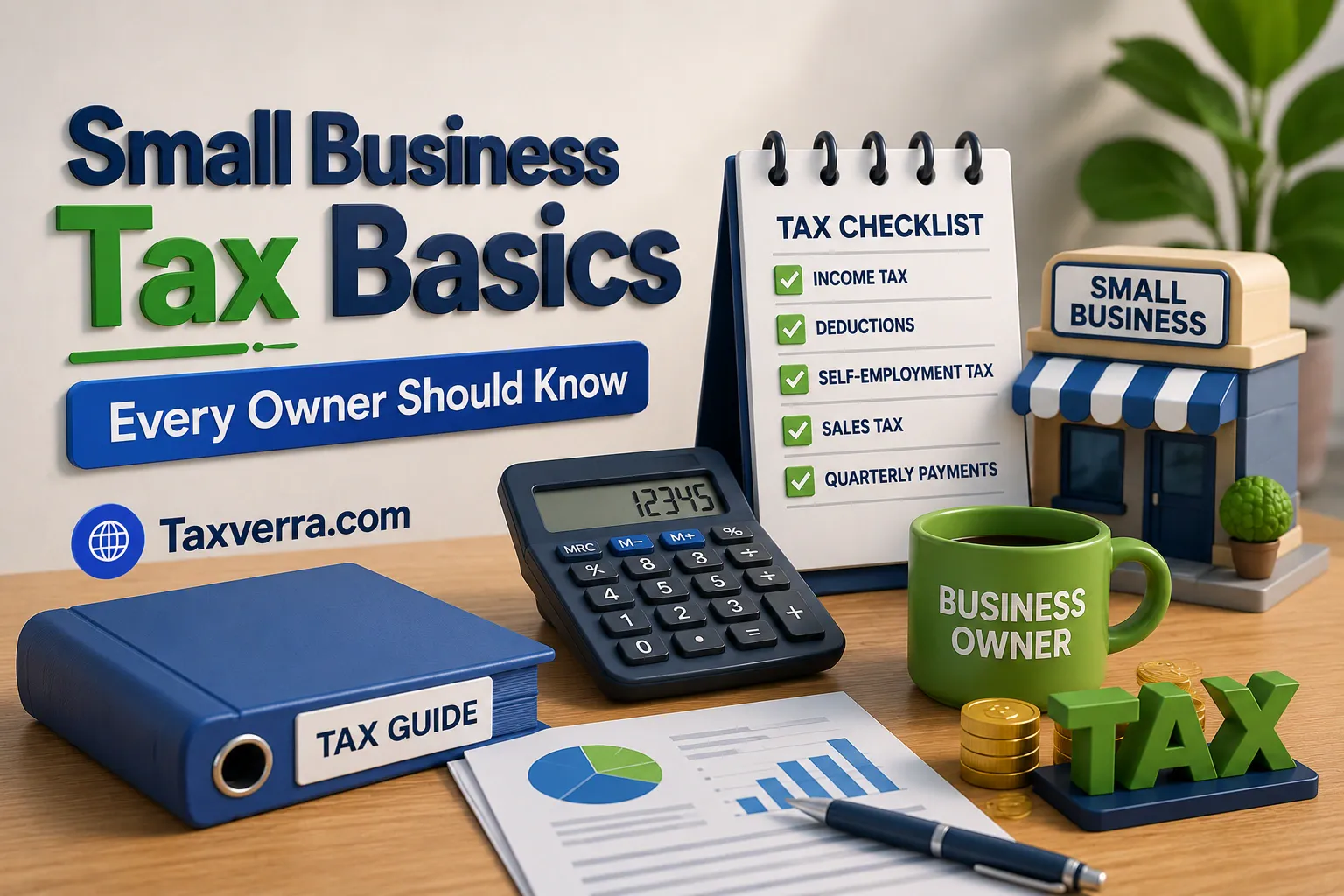
In this guide, we will explain small business tax basics every owner should know, including tax types, deductions, record keeping, and practical strategies for managing business taxes.
Why Understanding Business Taxes Is Important
Small businesses are required to follow specific tax regulations depending on their business structure and location. Proper tax management ensures that businesses remain compliant with government requirements.
Understanding business taxes helps entrepreneurs:
- avoid tax penalties and fines
- claim legitimate tax deductions
- maintain accurate financial records
- prepare tax returns easily
- improve overall financial planning
When business owners understand how taxes work, they can make smarter financial decisions that benefit their companies.
Understand Your Business Structure
The first step in understanding taxes is knowing your business structure. The structure of your business determines how it is taxed.
Common business structures include:
Sole Proprietorship
A sole proprietorship is the simplest business structure where the owner and the business are legally the same entity. Business income is reported on the owner’s personal tax return.
Partnership
A partnership involves two or more owners sharing profits and responsibilities. Income is typically passed through to partners and reported individually.
Limited Liability Company (LLC)
An LLC provides liability protection and flexible taxation options. Owners can choose to be taxed as individuals or corporations.
Corporation
Corporations are separate legal entities and are subject to corporate taxes.
Choosing the right structure affects tax obligations and financial planning.
Types of Taxes Small Businesses Must Pay
Small businesses may be responsible for several types of taxes depending on their operations.
Income Tax
All businesses must report their profits and pay income tax on earnings.
Self-Employment Tax
Self-employed individuals must pay self-employment tax to cover social security and healthcare contributions.
Sales Tax
Businesses that sell products or certain services may need to collect sales tax from customers.
Payroll Tax
Businesses with employees must pay payroll taxes, including employee tax withholding and employer contributions.
Understanding these taxes ensures that businesses remain compliant with regulations.
Track Income and Expenses Properly
Accurate financial tracking is essential for calculating taxable income.
Businesses must record all income sources such as:
- product sales
- service revenue
- online payments
- consulting income
- digital product sales
At the same time, all business expenses must be documented.
Common business expenses include:
- marketing costs
- office supplies
- business travel
- software subscriptions
- professional services
Proper record keeping ensures accurate tax reporting.
Understand Tax Deductions
Tax deductions allow businesses to reduce taxable income by subtracting legitimate business expenses.
Common deductions include:
- office rent
- internet and phone bills
- marketing expenses
- equipment purchases
- accounting and legal services
For example, if a business earns $50,000 in revenue and has $20,000 in deductible expenses, the taxable income becomes $30,000.
Understanding deductions can significantly reduce tax liability.
Maintain Organized Financial Records
Good record keeping is essential for tax preparation.
Businesses should maintain documents such as:
- invoices
- receipts
- bank statements
- payroll records
- tax filings
Digital document management systems make it easier to store and organize records securely.
Maintaining proper documentation also protects businesses during audits.
Use Accounting Software
Modern accounting software can simplify tax preparation by automatically recording financial transactions.
Popular accounting tools include:
- QuickBooks
- Xero
- Wave Accounting
- FreshBooks
These platforms help businesses:
- track income and expenses
- generate financial reports
- calculate tax obligations
- manage invoices and payments
Automation reduces errors and improves efficiency in tax preparation.
Pay Estimated Taxes
Many small business owners must pay taxes throughout the year rather than waiting until the annual tax filing deadline.
These payments are known as estimated taxes.
Estimated taxes are usually paid quarterly and are based on expected annual income.
Paying taxes throughout the year helps businesses avoid large tax bills and penalties.
Separate Business and Personal Finances
Separating personal and business finances simplifies tax preparation and financial reporting.
Best practices include:
- opening a business bank account
- using a business credit card
- recording business expenses separately
This separation ensures that business transactions are clearly identifiable during tax preparation.
Understand Tax Deadlines
Meeting tax deadlines is essential to avoid penalties.
Businesses should keep track of:
- quarterly estimated tax payments
- annual tax filing deadlines
- payroll tax deadlines
- sales tax reporting dates
Using financial calendars or accounting software can help businesses stay organized.
Work With a Tax Professional
Tax laws can be complex and frequently change. Many small business owners benefit from working with professional accountants or tax advisors.
A tax professional can help businesses:
- prepare tax returns
- identify deductions
- maintain compliance with tax regulations
- develop tax strategies
Professional guidance helps minimize financial risks and ensure accurate tax reporting.
Common Tax Mistakes Small Businesses Make
Many entrepreneurs make tax mistakes that could easily be avoided with proper planning.
Common mistakes include:
- failing to track expenses
- missing tax deadlines
- mixing personal and business finances
- underestimating tax obligations
- not keeping proper documentation
Avoiding these mistakes improves financial stability and compliance.
Best Tax Practices for Small Business Owners
Successful entrepreneurs follow several tax management practices.
These include:
- maintaining accurate bookkeeping records
- tracking all expenses and income
- paying taxes quarterly
- reviewing financial reports regularly
- consulting tax professionals when necessary
Following these practices ensures smooth tax management and financial stability.
Final Thoughts
Understanding small business tax basics is essential for every entrepreneur. Proper tax management helps businesses maintain compliance, reduce tax liability, and improve financial planning.
By tracking income and expenses carefully, maintaining organized financial records, using accounting software, and meeting tax deadlines, business owners can manage their tax obligations effectively.
A proactive approach to taxation not only simplifies financial management but also supports the long-term growth and success of the business.

