
Tracking business expenses is one of the most important financial tasks for any company. Whether you run a small business, freelance operation, or online store, keeping accurate expense records helps maintain financial control and improve profitability.
Many businesses fail not because they lack revenue but because they cannot properly manage expenses. Without a structured expense-tracking system, companies may lose track of spending, miss tax deductions, and struggle with financial reporting.
In this guide, we will explain how to track business expenses the right way, including the tools, methods, and best practices that ensure accurate financial management.
Why Expense Tracking Is Important
Business expenses represent the costs incurred while running operations. Tracking these expenses provides valuable insights into how money is spent and where improvements can be made.
Proper expense tracking helps businesses:
- Control operating costs
- Maintain accurate financial records
- Prepare financial statements
- Claim tax deductions
- Improve budgeting and forecasting
When businesses track expenses consistently, they can identify unnecessary spending and increase overall profitability.
Separate Personal and Business Expenses
One of the most common financial mistakes business owners make is mixing personal and business expenses.
When transactions are mixed, it becomes difficult to identify actual business costs.
Best Practices
- Open a dedicated business bank account
- Use a business credit card for company purchases
- Avoid paying personal bills with business funds
Separating finances simplifies bookkeeping and improves financial transparency.
Create an Expense Tracking System
Every business should establish a structured system for recording expenses.
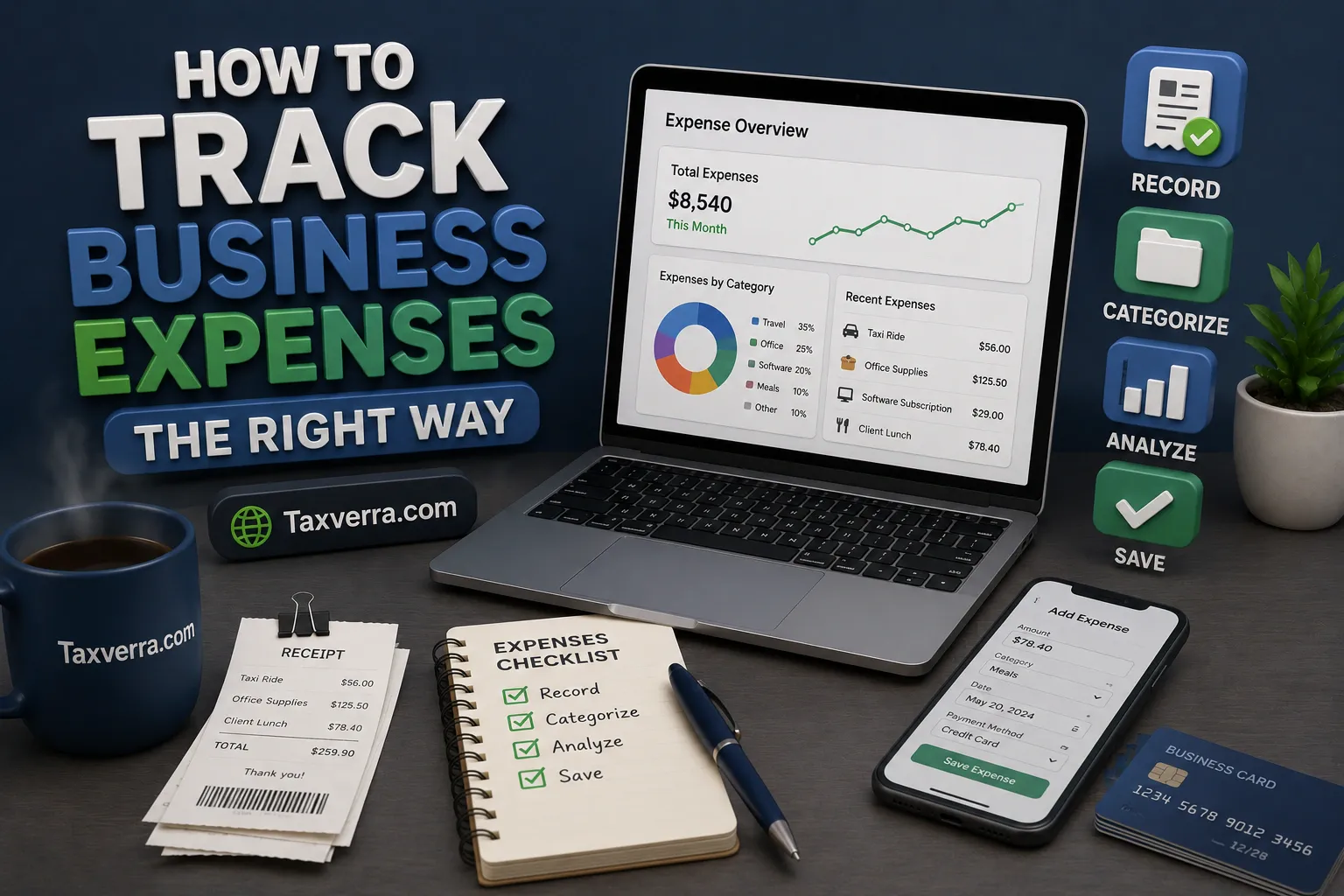
A simple system includes:
- Recording expenses daily or weekly
- Categorizing expenses properly
- Storing receipts and documentation
- Reviewing expense reports regularly
Without a consistent system, expense tracking can quickly become disorganized.
Categorize Business Expenses
Expense categorization helps businesses understand where money is being spent.
Common expense categories include:
Operating Expenses
Daily business costs such as rent, utilities, and office supplies.
Marketing Expenses
Advertising campaigns, social media marketing, and promotional activities.
Technology Expenses
Software subscriptions, cloud services, and IT infrastructure.
Travel Expenses
Transportation, hotel stays, and business travel costs.
Categorizing expenses allows businesses to analyze spending patterns and improve cost management.
Keep All Receipts and Documents
Documentation is essential for accurate expense tracking.
Businesses should keep records such as:
- purchase receipts
- invoices
- bank statements
- digital payment confirmations
Digital storage systems make document management easier and prevent loss of records.
Use Accounting Software
Modern accounting software simplifies expense tracking and financial reporting.
Popular options include:
- QuickBooks
- Xero
- Wave Accounting
- FreshBooks
These platforms allow businesses to:
- record expenses automatically
- categorize transactions
- generate expense reports
- monitor financial performance
Automation reduces manual work and minimizes errors.
Record Expenses Immediately
Waiting too long to record expenses increases the risk of forgetting transactions.
The best practice is to record expenses immediately after they occur.
Many accounting apps allow businesses to scan receipts and upload expenses instantly using mobile devices.
This real-time recording improves accuracy and efficiency.
Monitor Expense Reports Regularly
Expense reports summarize business spending over a specific period.
Businesses should review these reports regularly to analyze financial performance.
A typical expense report includes:
- expense category
- date of transaction
- vendor name
- amount spent
- payment method
Regular reviews help identify unnecessary costs and improve budgeting.
Understand Tax-Deductible Expenses
Many business expenses qualify as tax deductions, reducing taxable income.
Common deductible expenses include:
- office supplies
- business travel
- internet and phone bills
- marketing expenses
- professional services
Accurate expense tracking ensures that businesses claim all eligible deductions during tax filing.
Conduct Regular Bank Reconciliation
Bank reconciliation involves comparing accounting records with bank statements.
This process helps verify that all expenses are recorded correctly.
Reconciliation identifies issues such as:
- missing transactions
- duplicate entries
- incorrect amounts
Monthly reconciliation ensures accurate financial records.
Create a Business Budget
Budgeting helps businesses control spending and plan financial activities.
A well-structured budget includes:
- expected revenue
- projected expenses
- savings and investment plans
Comparing actual expenses with budgeted expenses helps businesses manage financial performance effectively.
Common Expense Tracking Mistakes
Many businesses struggle with expense management due to poor financial practices.
Common mistakes include:
- not recording small expenses
- losing receipts
- mixing personal and business spending
- failing to review financial reports
- relying only on bank balances
Avoiding these mistakes improves financial accuracy and business profitability.
Practical Example of Expense Tracking
Consider a small digital marketing agency.
Monthly Expenses
Office rent: $1,200
Software subscriptions: $300
Advertising costs: $1,000
Utilities: $200
Office supplies: $100
Total Expenses = $2,800
By tracking these expenses regularly, the business can monitor financial performance and adjust its budget if necessary.
Best Practices for Expense Tracking
To maintain accurate financial records, businesses should follow these best practices:
- maintain organized bookkeeping records
- record expenses immediately
- categorize expenses properly
- use accounting software
- store digital copies of receipts
- review financial reports monthly
Following these practices ensures effective financial management and long-term business success.
Final Thoughts
Tracking business expenses the right way is essential for financial stability and business growth. Proper expense management helps businesses control costs, maintain accurate financial records, and maximize tax deductions.
By implementing structured systems such as expense categorization, accounting software, receipt management, and regular financial reviews, businesses can maintain clear financial visibility and make informed decisions.
Effective expense tracking not only improves profitability but also strengthens the overall financial health of the business.

