

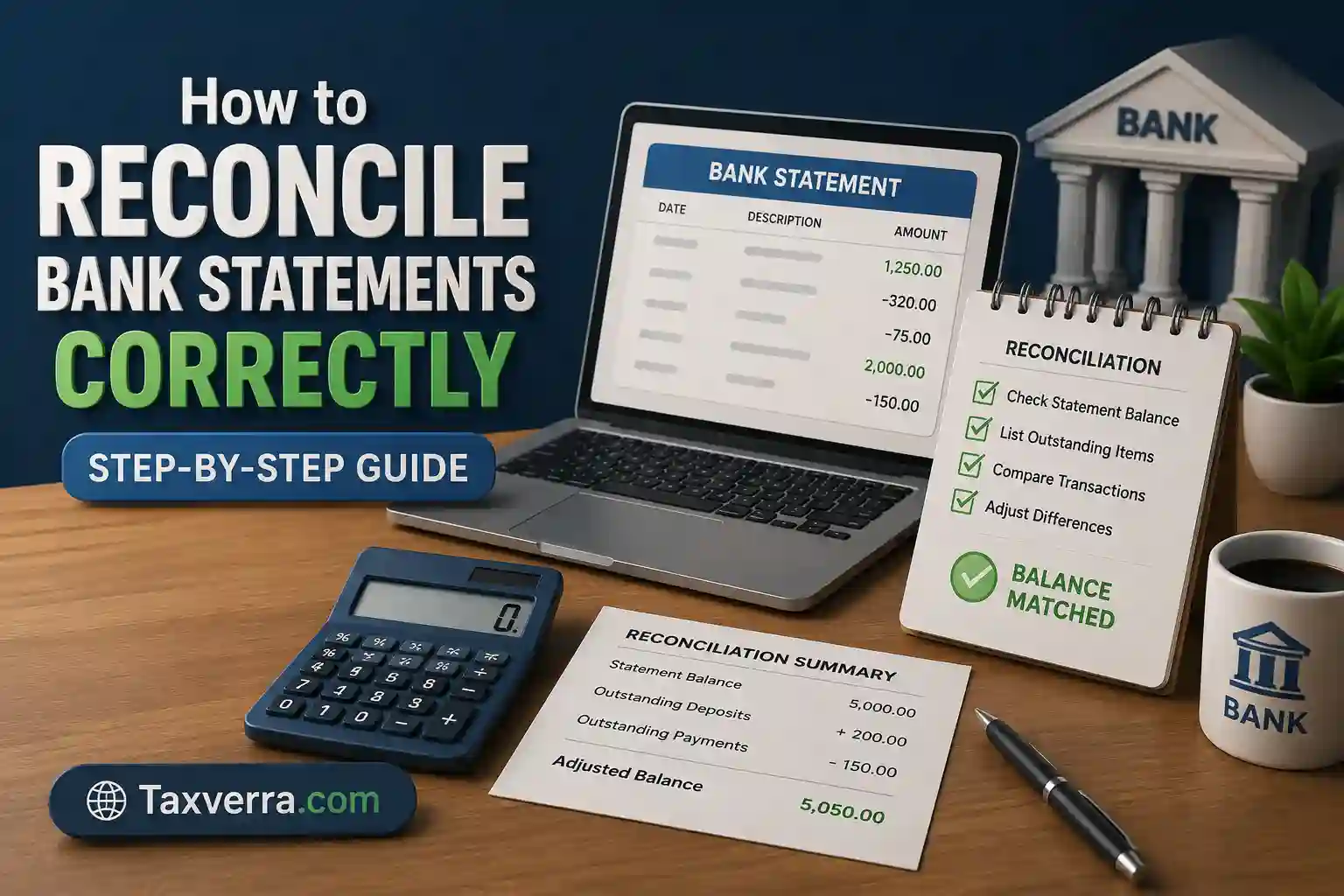
Bank reconciliation is one of the most important tasks in accounting and bookkeeping. It ensures that the balances in a company’s accounting records match the balances shown on bank statements. When performed regularly, bank reconciliation helps detect errors, prevent fraud, and maintain accurate financial records.
Many small businesses, freelancers, and even experienced accountants sometimes struggle with reconciliation because of missing transactions, bank charges, or timing differences. However, when done systematically, reconciling bank statements becomes a straightforward process.
This guide explains how to reconcile bank statements correctly, why it is important, and the best practices businesses should follow to maintain accurate financial records.
What Is Bank Reconciliation?
Bank reconciliation is the process of comparing a company’s internal financial records (such as the cash ledger or accounting software) with the bank statement to ensure both balances match.
Differences between these records can occur due to:
- Outstanding checks
- Deposits in transit
- Bank service charges
- Interest income
- Recording errors
By identifying and adjusting these differences, businesses can determine the true cash balance.
Why Bank Reconciliation Is Important
Bank reconciliation plays a critical role in financial management and accounting accuracy.
1. Detects Accounting Errors
Sometimes transactions are recorded incorrectly in accounting systems. Reconciliation helps identify such mistakes.
2. Prevents Fraud
Regular reconciliation helps businesses detect unauthorized transactions or suspicious withdrawals.
3. Ensures Accurate Financial Statements
Cash balances reported in financial statements must be correct. Bank reconciliation confirms the accuracy of those figures.
4. Improves Cash Flow Management
Knowing the actual cash position allows businesses to make better financial decisions.
5. Maintains Internal Control
Strong financial control systems always include regular bank reconciliations.
Chart: Common Reasons for Bank Reconciliation Differences
| Reason | Explanation |
|---|---|
| Outstanding Checks | Checks issued but not yet cleared |
| Deposits in Transit | Deposits recorded but not processed by the bank |
| Bank Charges | Service fees deducted by the bank |
| Interest Income | Interest credited by the bank |
| Recording Errors | Incorrect transaction entries |
These differences must be identified and adjusted during the reconciliation process.
Step-by-Step Guide to Bank Reconciliation
Following a structured process ensures accurate reconciliation.
Step 1: Collect Required Documents
Start by gathering the necessary documents.
These include:
- Bank statement for the selected period
- Cash book or general ledger
- Previous bank reconciliation report
- Supporting receipts or payment records
Having all documents ready simplifies the comparison process.
Step 2: Compare Opening Balances
The first step is to ensure that the opening balance in the accounting records matches the opening balance on the bank statement.
If the opening balances do not match, it may indicate:
- errors from the previous reconciliation
- missing transactions
- incorrect adjustments
Correcting opening balance issues is essential before continuing.
Step 3: Match Deposits
Next, compare all deposits recorded in the accounting system with deposits listed in the bank statement.
Mark each matching transaction.
If a deposit appears in accounting records but not on the bank statement, it may be classified as a deposit in transit.
Example:
| Date | Amount | Status |
|---|---|---|
| Jan 10 | $500 | Cleared |
| Jan 12 | $750 | Cleared |
| Jan 30 | $600 | Deposit in transit |
Deposits in transit will appear on the next bank statement.
Step 4: Match Withdrawals and Payments
Next, compare withdrawals, payments, and checks.
Mark every transaction that appears in both records.
Transactions that appear in the accounting records but not on the bank statement are usually outstanding checks.
Example:
| Check No | Amount | Status |
|---|---|---|
| 101 | $300 | Cleared |
| 102 | $450 | Cleared |
| 103 | $200 | Outstanding |
Outstanding checks remain pending until the bank processes them.
Step 5: Identify Bank Charges and Interest
Banks often include transactions that businesses have not yet recorded.
Examples include:
- bank service fees
- ATM charges
- interest income
- loan payments
These must be added to accounting records.
Example:
| Description | Amount |
|---|---|
| Bank fee | $15 |
| Interest income | $8 |
After recording these items, the accounting records become aligned with the bank statement.
Step 6: Adjust Errors
Errors can occur either in the bank statement or in the accounting records.
Common errors include:
- incorrect amounts entered
- duplicate entries
- missed transactions
- data entry mistakes
Correct these errors before finalizing reconciliation.
Example error:
| Recorded Amount | Actual Amount |
|---|---|
| $520 | $250 |
Correcting such errors ensures accurate balances.
Graph: Typical Bank Reconciliation Flow
| Step | Process |
|---|---|
| 1 | Collect bank statement |
| 2 | Match deposits |
| 3 | Match withdrawals |
| 4 | Identify outstanding items |
| 5 | Adjust accounting records |
| 6 | Confirm final balance |
This process ensures systematic reconciliation.
Step 7: Calculate Adjusted Balances
After identifying all differences, calculate adjusted balances.
The goal is to make both balances equal.
Example:
Bank Statement Balance
$10,000
Add: Deposits in transit
$1,200
Less: Outstanding checks
$800
Adjusted bank balance = $10,400
Accounting Balance
$10,420
Less: Bank fees
$20
Adjusted book balance = $10,400
Both balances now match.
Chart: Bank Reconciliation Example
| Description | Amount |
|---|---|
| Bank Balance | $10,000 |
| Add Deposits in Transit | +$1,200 |
| Less Outstanding Checks | -$800 |
| Adjusted Bank Balance | $10,400 |
Step 8: Record Adjusting Entries
Once reconciliation is complete, adjusting journal entries should be recorded.
Examples:
Bank Fees
Debit: Bank Charges Expense
Credit: Cash
Interest Income
Debit: Cash
Credit: Interest Income
These entries ensure accounting records reflect the correct cash balance.
Step 9: Prepare Reconciliation Report
A bank reconciliation report documents the entire reconciliation process.
Typical report components include:
- bank statement balance
- adjustments
- outstanding checks
- deposits in transit
- adjusted cash balance
Maintaining proper documentation helps during audits and financial reviews.
Step 10: Perform Reconciliation Regularly
Bank reconciliation should not be done once a year.
Most businesses perform reconciliation:
- Monthly (recommended)
- Weekly (for high transaction volume businesses)
- Daily (large organizations)
Frequent reconciliation ensures financial records remain accurate.
Chart: Recommended Reconciliation Frequency
| Business Size | Frequency |
|---|---|
| Freelancers | Monthly |
| Small Businesses | Monthly |
| Medium Companies | Weekly |
| Large Corporations | Daily |
Using Accounting Software for Bank Reconciliation
Modern accounting software simplifies reconciliation through automation.
Popular tools include:
- QuickBooks
- Xero
- Zoho Books
- FreshBooks
Features typically include:
- automatic bank feeds
- transaction matching
- reconciliation reports
- error detection
Automation significantly reduces manual work and improves accuracy.
Best Practices for Accurate Bank Reconciliation
Businesses should follow these best practices.
✔ Reconcile accounts every month
✔ Record transactions immediately
✔ Keep supporting documents
✔ Investigate discrepancies quickly
✔ Use accounting software
✔ Maintain strong internal controls
Following these practices helps maintain reliable financial records.
Common Bank Reconciliation Mistakes
Avoid these common mistakes:
- forgetting bank charges
- ignoring small discrepancies
- reconciling infrequently
- failing to review prior reconciliations
- not documenting adjustments
Correcting these habits improves financial accuracy.
How Long Should Reconciliation Records Be Kept?
Businesses should maintain reconciliation records for several years.
Recommended retention period:
3 to 7 years
Reasons include:
- tax compliance
- audits
- financial analysis
- legal documentation
Proper record retention ensures financial transparency.
Final Thoughts
Bank reconciliation is a critical accounting process that ensures the accuracy of financial records. By comparing internal accounting records with bank statements, businesses can identify discrepancies, correct errors, and maintain reliable cash balances.
Regular reconciliation improves financial control, strengthens fraud detection, and ensures accurate financial reporting. Whether performed manually or using accounting software, following a structured reconciliation process helps businesses maintain confidence in their financial data.
When done consistently, bank reconciliation becomes a simple yet powerful tool for maintaining financial accuracy and supporting sound business decisions.

